May 21, 2026
Why Humans Attach Meaning to Ritual Objects
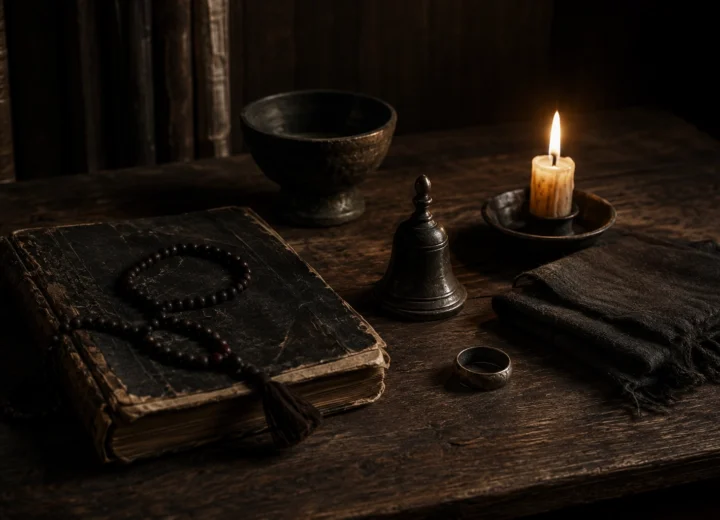
An object does not need to glow, move, or contain a hidden mechanism in order to become powerful. A bell can become more than metal. A ring can become more than a circle. A cup can become more than a vessel. A book can become more than paper, and a stone carried through one difficult period of life can become impossible to regard as merely stone.
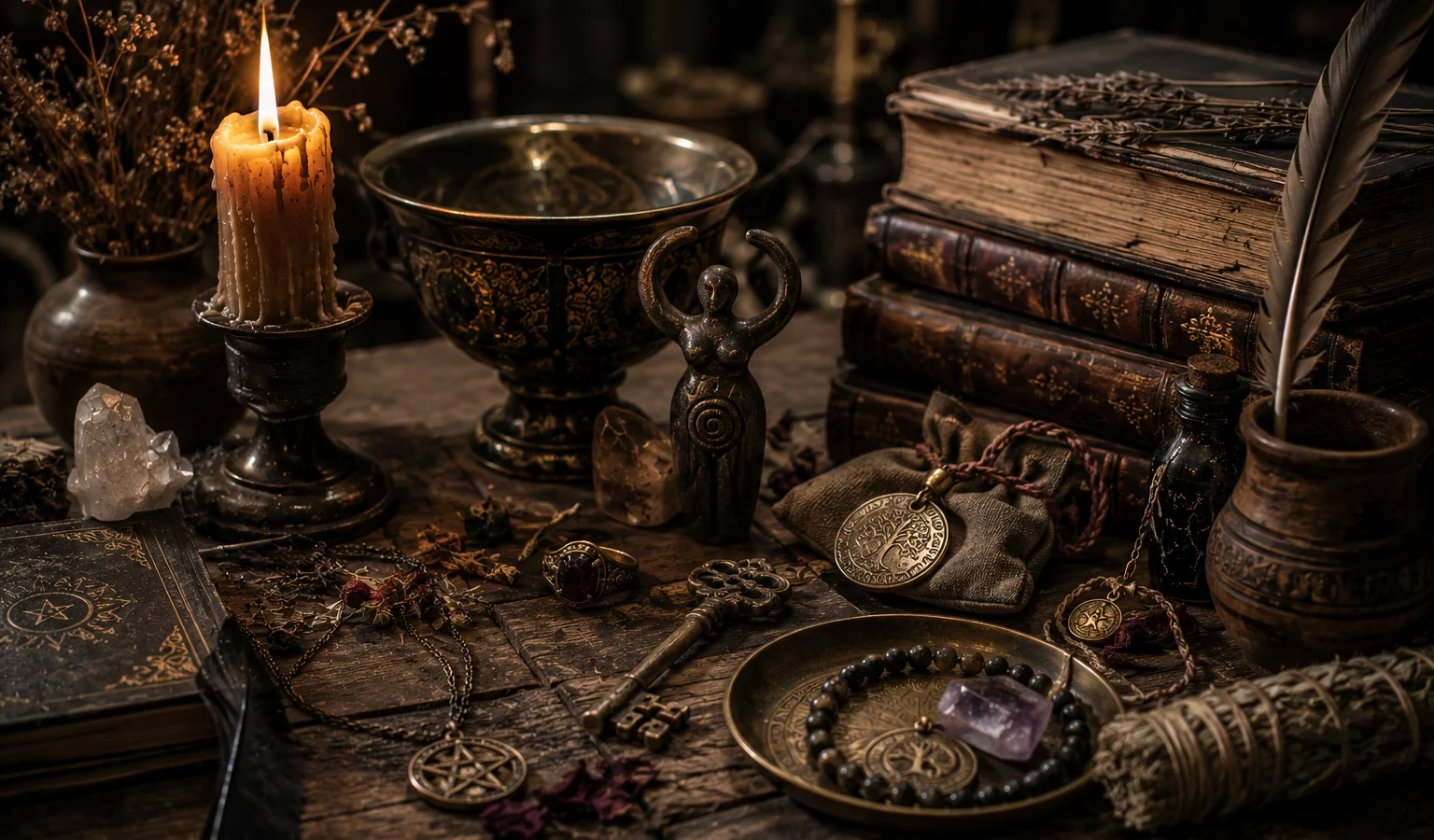
This is why ritual objects matter so deeply across religion, family memory, mourning, ceremony, personal habit, and cultural tradition. Repeated use changes the relationship between a person and a material thing until function, memory, gesture, identity, belief, and history become difficult to separate.
The object itself may remain physically ordinary. What changes is the network of relationships around it.
Lucifer Heritage approaches ritual objects from that point of view. A sacred object should not be reduced to decoration, and a personal object should not be advertised as though power were a guaranteed product feature. Material, context, use, restriction, inheritance, memory, and community all matter.
Objects become powerful when human attention returns to them often enough that use, memory, and meaning begin to occupy the same place.
Ritual Objects Begin With Material Things
Most ritual objects begin with practical material properties.
A bowl holds something. A knife cuts. A candle burns. A bell makes sound. A textile covers a body or surface. A book preserves words. A ring can be worn. A vessel can contain water, wine, oil, incense, food, or another substance.
Ritual does not necessarily erase these practical functions. It reorganizes them.
A bowl may hold an offering rather than an ordinary meal. A bell may announce sacred time instead of an ordinary warning. A candle may become part of prayer, vigil, mourning, or remembrance. A cloth may distinguish a ceremonial space from daily use.
The first principle of ritual objects is therefore simple: meaning grows around use.
Meaning Is Built Through Repetition
A cup used once during a ceremony may feel unusual. A cup brought out every year for thirty years has accumulated something else: expectation.
The hands know how it is held. The family knows when it appears. The community knows what happens before and after it is placed on the table.
Repetition gives an object temporal depth.
Materially, the cup may have changed only through scratches or wear. Emotionally, it has become an archive of previous acts.
This is one reason ritual objects often become difficult to replace even when an identical new object could perform the same practical function. The replacement lacks the history of contact.
Touch Makes Symbolism Bodily
Ritual objects are often handled in specific ways.
They may be held with both hands, passed between participants, kissed, raised, washed, wrapped, carried around the body, touched to the forehead, placed in one particular location, or handled only by certain people.
Touch turns symbolism into bodily memory.
A person may know how to hold an inherited prayer book before being able to explain its history. Someone may automatically reach for a ring during anxiety because years of use have connected the gesture with memory or reassurance.
The meaning of ritual objects therefore exists partly in muscle memory, posture, and repeated movement, not only in verbal explanation.
Objects Give Attention a Location
Abstract states are difficult to hold for long.
Grief, promise, prayer, belonging, fear, transition, memory, loyalty, and hope do not have physical edges. Ritual objects give the eye and body somewhere to place them.
A candle flame creates a visible center. Prayer beads divide repetition into touchable units. A book gives words a material location. A bell turns the beginning of silence into sound. A photograph gives remembrance a face.
This is why ritual objects can feel psychologically stabilizing without requiring claims about invisible substances. The object focuses attention and helps organize an action.
The Material Itself Can Carry Meaning
Material choice is often part of ritual interpretation.
Gold, silver, jade, wood, clay, stone, cloth, wax, bone, glass, paper, and iron have different physical properties, costs, histories, and cultural associations. Some traditions deliberately use precious materials because expense, durability, rarity, or visual brilliance communicates reverence or status.
The Metropolitan Museum of Art documents medieval Christian liturgical objects made from costly materials and designed for use in worship. Their form and craftsmanship were connected with sacred function as well as artistic value.
Yet expensive material is not required for symbolic depth.
A plain wooden object inherited through generations can become more emotionally important than an elaborate object purchased yesterday.
Price and meaning do not measure the same thing.
Why Precious Objects Appear in Sacred Contexts
Precious materials can make reverence visible.
Gold does not decay like ordinary iron. Silver catches light. Gemstones require labor and resources. Fine embroidery can represent months of skilled work. When communities place expensive material inside ritual settings, the cost itself can become part of the offering.
This can also create social hierarchy. Sacred art may reveal wealth, patronage, political authority, or unequal access as much as devotion.
A careful reading of ritual objects asks who paid for them, who made them, who controlled them, and who was allowed to approach them.
The Same Shape Can Mean Different Things
No object arrives with one permanent symbolic dictionary.
A blade can be domestic, agricultural, surgical, military, sacrificial, or ceremonial. A bell can summon worshippers, mark meditation, warn of danger, signal time, or hang from an animal collar. A cup can belong to ordinary dining, family remembrance, liturgy, hospitality, or mourning.
Context gives material its grammar.
This is why ritual objects should never be interpreted from shape alone. Function, tradition, gesture, location, and accompanying words may matter more than visual resemblance.
Ritual Meaning Can Exist Between Objects
Some ritual objects are designed to function as pairs or sets.
The Metropolitan Museum of Art describes the Tibetan dril-bu bell and dorje scepter as matched liturgical instruments used together during ritual recitation. The bell is held in one hand and the scepter in the other, with prescribed gestures linking the two.
The example is important because meaning does not belong only inside one object.
Relationship can be part of the ritual structure.
Separating one object from its partner may preserve material beauty while reducing interpretive accuracy. A museum label that presents only one half of a ritual pair can never fully reproduce the action that gave the pair meaning.
Gesture Can Change the Status of an Object
Some traditions recognize a difference between an ordinary object and the same object after blessing, consecration, inscription, filling, dedication, or another authorized ritual action.
The material may look almost unchanged. Social and religious status does not.
This distinction is important because ritual objects are often transformed through recognition rather than through visible physical alteration.
A general symbolic journal should describe such beliefs respectfully without pretending that every tradition understands consecration in the same way.
Objects Can Mark Social Roles
Some ritual objects tell a community who is allowed to do what.
A staff, robe, ring, key, crown, instrument, insignia, book, vessel, or ceremonial tool may identify office, rank, initiation, responsibility, or authority.
The object makes social structure visible.
This can create continuity and order. It can also reinforce hierarchy.
When studying ritual objects, one of the most useful questions is often very practical: who may touch this, and who may not?
Restricted Access Is Part of Meaning
Some objects are reserved for clergy, elders, initiated members, hereditary specialists, particular genders, or people holding specific offices, depending on the tradition.
Restriction may protect sacred boundaries, preserve specialist knowledge, or maintain a social hierarchy.
It should not be flattened into a simple moral category without context.
The important point is that access itself becomes symbolic. An object visible only at particular moments can acquire more weight precisely because ordinary handling is prevented.
Burial Changes the Meaning of Objects
Archaeologists often encounter objects in funerary settings.
Placement beside or on the body can change interpretation because the grave creates a relationship among object, person, status, death, and ritual practice.
The Met’s Neolithic Chinese jade bi disks provide a useful example. Museum interpretation notes that multiple bi disks could be placed in high-status burials, including around or upon the body.
The shape alone cannot explain the full meaning.
For ritual objects, archaeological context can be as important as material form. Remove an object from its original arrangement and part of the evidence disappears with it.
Ritual Objects Can Carry the Dead Into Memory
An object does not need to be buried in order to become part of mourning.
A ring, photograph, prayer book, candleholder, letter, cup, piece of clothing, or small personal possession may become more important after the owner’s death because ordinary use has ended.
The object remains available while the person does not.
That imbalance gives material things an unusual emotional force.
This is one reason ritual objects often enter memorial practice. The object provides continuity without pretending that loss has been reversed.
Inherited Objects Combine Tradition and Biography
An inherited object can carry two kinds of meaning at the same time.
The formal tradition explains what the object is. Family memory explains who touched it.
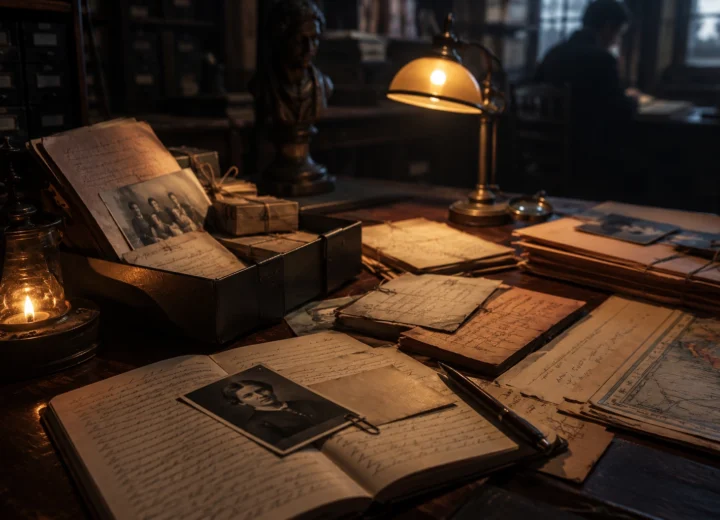
A candlestick may belong to a religious practice and to one grandmother in particular. A prayer book can contain an institutional text and private handwriting. A ring may represent marriage generally and one specific marriage historically.
Inheritance makes public symbolism intimate.
This is why older ritual objects can feel emotionally denser than newly purchased equivalents even when both belong to the same tradition.
Wear Becomes Biography
Scratches, polished edges, wax residue, repairs, smoke darkening, faded cloth, finger marks, and missing pieces can increase an object’s emotional force because they prove use.
A pristine reproduction may be visually perfect and historically empty. A damaged original can reveal how people actually handled it.
Wear should not be romanticized automatically. Damage can also represent neglect, poor storage, violence, or loss.
Still, on many ritual objects, traces of repeated contact become a material biography.
Museum Display Creates a New Ritual Context
A sacred object inside a museum enters another system.
It receives a catalogue number, label, case, conservation environment, lighting plan, and viewing distance. Visitors may admire craftsmanship without knowing how the object moved, sounded, smelled, felt, or functioned during ritual.
The museum preserves material and can simultaneously freeze action.
An object once meant to be carried, sounded, filled, touched, dressed, or revealed only at certain moments becomes continuously visible but physically inaccessible.
This does not make museum display wrong. It shows that ritual objects can acquire new meanings when their setting changes.
Provenance Is Part of Symbolic Meaning
How an object arrived where it is now matters.
Sacred and ceremonial objects have histories of inheritance, gift, trade, excavation, sale, theft, war, colonial removal, private collecting, donation, and institutional acquisition.
When provenance is unclear, the uncertainty is not merely administrative. It can affect interpretation.
A community may experience the absence of an object as a break in ritual continuity even while a museum preserves the same object physically.
This is why ritual objects should be studied through ownership history as well as iconography.
Theft Damages More Than Property
When a sacred object is looted or stolen, the loss can include more than economic value.
The community may lose access to ritual practice, ancestry, authority, memory, or the material evidence of its own history.
Theft can therefore remove relationship as well as property.
This becomes especially important when the object was never intended to function independently of the people who used it.
Talismans Make Protection Portable
Many traditions have created objects intended to carry protection with a person.
Amulets, inscribed pendants, prayer scrolls, sacred texts, protective textiles, and small images allow larger systems of belief to accompany the body physically.
The Met’s exhibition Power and Piety documented Islamic arms, armor, and portable talismanic material whose inscriptions and images were historically understood as protective in dangerous circumstances.
This is an important example because the objects should be described within the beliefs of the people who made and used them.
A modern writer does not need to verify supernatural efficacy in order to describe historical understanding accurately.
Protection Is a Relationship, Not a Product Feature
Commercial spirituality often presents protection as though it were guaranteed by purchase.
Buy this amulet for safety. Buy this crystal for abundance. Buy this candle for love. Buy this knife for transformation.
Such marketing turns symbolic relationship into product specification.
A historically meaningful talisman belongs to a specific system of belief, practice, inscription, blessing, use, and interpretation. Buying an object that looks similar does not automatically reproduce that system.
This is one of the most important principles for the Lucifer Heritage category Objects of Power.
Ritual objects can be meaningful without being sold as machines that replace judgment, action, medicine, relationships, or responsibility.
Replicas Can Become Meaningful Through New Use
A replica lacks one kind of historical continuity but can acquire another.
A newly made object used repeatedly by a living community may become meaningful through current practice. Its value is different from that of an ancient original, but different does not mean empty.
Historical authenticity and ritual vitality are not the same measurement.
An old object may be crucial evidence of the past while no longer participating in living practice. A new object may have little historical age while becoming deeply important through present use.
Personal Objects Can Become Ritual Without Formal Religion
Ritualization is not limited to institutional religion.
A photograph may be placed beside a lamp every anniversary. A stone may be carried during difficult travel. A notebook may be opened before an important decision. A ring may be touched before speaking publicly.
These practices can remain entirely personal.
What matters is repetition, context, and attention.
This is how ordinary material things can enter private symbolic life without pretending to possess ancient authority.
Candles Show How Material and Meaning Meet
Candles are among the clearest examples of how a simple object can become symbolically dense.
Wax, wick, flame, duration, heat, smoke, and limited light are physical properties. Prayer, vigil, mourning, memory, sacred time, and attention are cultural and emotional interpretations built around those properties.
Lucifer Heritage explores this in The Symbolism of Candles Across Traditions. The article treats the candle as an object whose power comes through material form, repeated gesture, and inherited use rather than universal magical claims.
The related The Forgotten History of Candle Rituals follows the historical development of those practices more closely.
Ritual Objects Help Mark Uncertain Time
Objects become especially important during transition because uncertain periods are difficult to locate emotionally.
A candle, ring, cup, cloth, photograph, book, or small inherited object can help mark an interval that otherwise has no visible edge.
This connects ritual objects with the broader human tendency explored in Rituals During Uncertainty: Why Humans Create Order. Repeated actions can give temporary form to waiting, grief, preparation, transition, and unresolved outcomes.
The object does not need to change the future. It gives the present somewhere to gather.
Sacred Spaces Give Objects Another Layer
An object is also shaped by place.
A bell in a church tower, a vessel on an altar, a book in a shrine, an offering in a sacred grove, or a memorial candle in a cemetery cannot be interpreted fully apart from its setting.
Place establishes expectations about who uses the object, when it appears, and what kind of behavior surrounds it.
The Lucifer Heritage essay The Symbolism of Abandoned Churches shows what happens when sacred architecture remains after regular ritual use has weakened or ended.
The object and the space often preserve one another’s meaning.
Objects Can Become Small Archives
A used object can preserve more than function.
It can carry scratches, inscriptions, repairs, names, dates, residue, handwriting, altered surfaces, and family associations. These traces turn material into evidence.
In this sense, ritual objects can resemble the old books explored in The Mystery of Symbolic Marginal Notes in Old Books. The object’s official purpose is only one layer. Later users create another.
Material culture becomes an archive of attention.
Why Objects Sometimes Feel Charged
People often describe certain objects as feeling charged, heavy, warm, unsettling, comforting, or unusually present.
Such experiences can arise from many sources: memory, expectation, cultural knowledge, sensory cues, grief, inherited stories, religious belief, provenance, or repeated handling.
A general symbolic journal should not reduce all of these experiences to one explanation.
Some traditions describe sacred presence or ritual efficacy in theological terms. Psychology may describe learned association, salience, or emotional memory. Family history may provide another layer entirely.
The same ritual objects can participate in several interpretive systems at once.
When Objects Become Too Easy to Read
Symbolic interpretation becomes shallow when every object receives an automatic meaning.
A key means opportunity. A knife means severing. A ring means eternity. A candle means spirit. A stone means grounding.
These associations may be useful in some contexts, but they are not universal laws.
A key may simply belong to a lock whose history matters more than abstract symbolism. A knife may be a family tool. A ring may mark office rather than marriage.
The object becomes more interesting when context remains attached.
A Quiet Method for Reading Ritual Objects
A careful reading begins with the object before moving toward interpretation.
- What is the object made from?
- What practical function does the material allow?
- Who made it, if known?
- Who uses it?
- How is it handled, carried, worn, displayed, or stored?
- What words, gestures, or other objects accompany it?
- Is access restricted?
- Does meaning come from religion, family inheritance, personal memory, office, or several layers?
- What evidence exists for its provenance?
- Has museum display, migration, sale, theft, or inheritance changed its function?
- Which claims belong to a living tradition, and which were added later?
- Is a commercial description promising more than history or evidence supports?
This method does not remove mystery from ritual objects. It keeps their history attached to their symbolism.
Symbolic Observations ✦
- Ritual objects usually begin with ordinary material properties that become reorganized through structured use.
- Repetition creates expectation and gives objects temporal depth.
- Touch turns symbolic meaning into bodily memory.
- Material value can communicate reverence or status, but price does not determine symbolic depth.
- Some ritual meanings exist between paired objects rather than inside one object alone.
- Burial context can be as important as an object’s shape.
- Inherited objects combine public tradition with private biography.
- Wear can become evidence of use, while damage can also record neglect or violence.
- Museum display preserves material but changes the relationship between object, action, and audience.
- Provenance belongs to interpretation because ownership history can include displacement, theft, and contested removal.
- Replicas can acquire new ritual meaning through present use without pretending to be historically ancient.
- Objects of power should never be sold as guaranteed replacements for judgment, action, care, or responsibility.
The Thing That Learned to Mean More
The deepest reason humans create and preserve ritual objects may be that invisible parts of life are difficult to hold without form.
Grief needs somewhere for the eye to rest. Promise benefits from something the hand can touch. Sacred time often begins with a sound, light, text, vessel, cloth, or gesture. Memory gathers around whatever survives repeated contact.
The object does not replace grief, promise, belief, identity, or memory.
It gives them a material meeting point.
After enough years, the thing can become difficult to call ordinary. The surface remembers through wear, the family remembers through use, the community remembers through repetition, and the next person learns what to do by watching hands that learned it before them.
This is the quiet power of ritual objects.
The material remains finite.
The relationships around it continue to grow.
Continue Through the Archive
The Symbolism of Candles Across Traditions
A study of contained fire, prayer, sacred time, mourning, memory, and the way repeated use turns a simple object into a symbolic center.
The Forgotten History of Candle Rituals
A historical exploration of household light, worship, vigil, mourning, sacred time, and the long development of ritual flame.
Rituals During Uncertainty: Why Humans Create Order
An examination of repetition, anxiety, transition, temporary order, community, and the objects people use when the future remains unresolved.
The Symbolism of Abandoned Churches
A reflection on sacred space, interrupted ritual, preservation, memory, community, and the material traces left after regular worship changes.
The Mystery of Symbolic Marginal Notes in Old Books
An archive essay on handwritten traces, inherited books, private symbols, memory, use, and the ways material objects preserve human attention.
Objects of Power
Continue through essays on ritual objects, sacred materials, inherited things, symbolic use, memory, and the relationships that make ordinary objects difficult to call ordinary.
Further Reading & Sources
- The Metropolitan Museum of Art: Art for the Christian Liturgy in the Middle Ages
Historical context for medieval liturgical vessels, crosses, books, lighting devices, precious materials, and the relationship between worship and artistic form. - The Metropolitan Museum of Art: Dril-Bu and Dorje
A documented Tibetan Buddhist ritual pair showing how matched objects, prescribed gestures, sound, and coordinated use create meaning together. - The Metropolitan Museum of Art: Ritual Object (Bi)
Museum documentation of a Neolithic Chinese jade bi and the archaeological context in which such disks were placed in elite burials. - The Metropolitan Museum of Art: Power and Piety, Islamic Talismans on the Battlefield
Historical material on inscriptions, images, arms, armor, and protective beliefs in the Islamic world. - The Metropolitan Museum of Art: The Use of Talismans in Islamic Arms and Armor
Further context for portable protection, inscriptions, belief, danger, and the historical use of talismanic objects. - The Metropolitan Museum of Art: Talismanic Scroll
An example of a portable text containing prayers, incantations, and Qur’anic verses intended to be carried in an amulet context.