May 16, 2026
Why Forgotten Manuscripts Fascinate Human Imagination
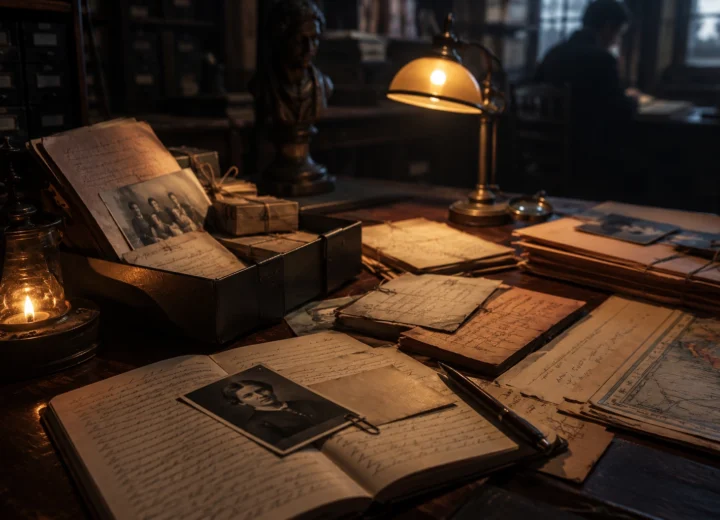
There is a particular kind of silence that belongs to old paper. A manuscript may preserve a prayer, a legal formula, a medical recipe, a poem, a family record, a draft, a piece of music, or a text whose original purpose has become difficult to reconstruct. The words may survive while the room, community, language habit, argument, or ritual that once made them obvious has disappeared.
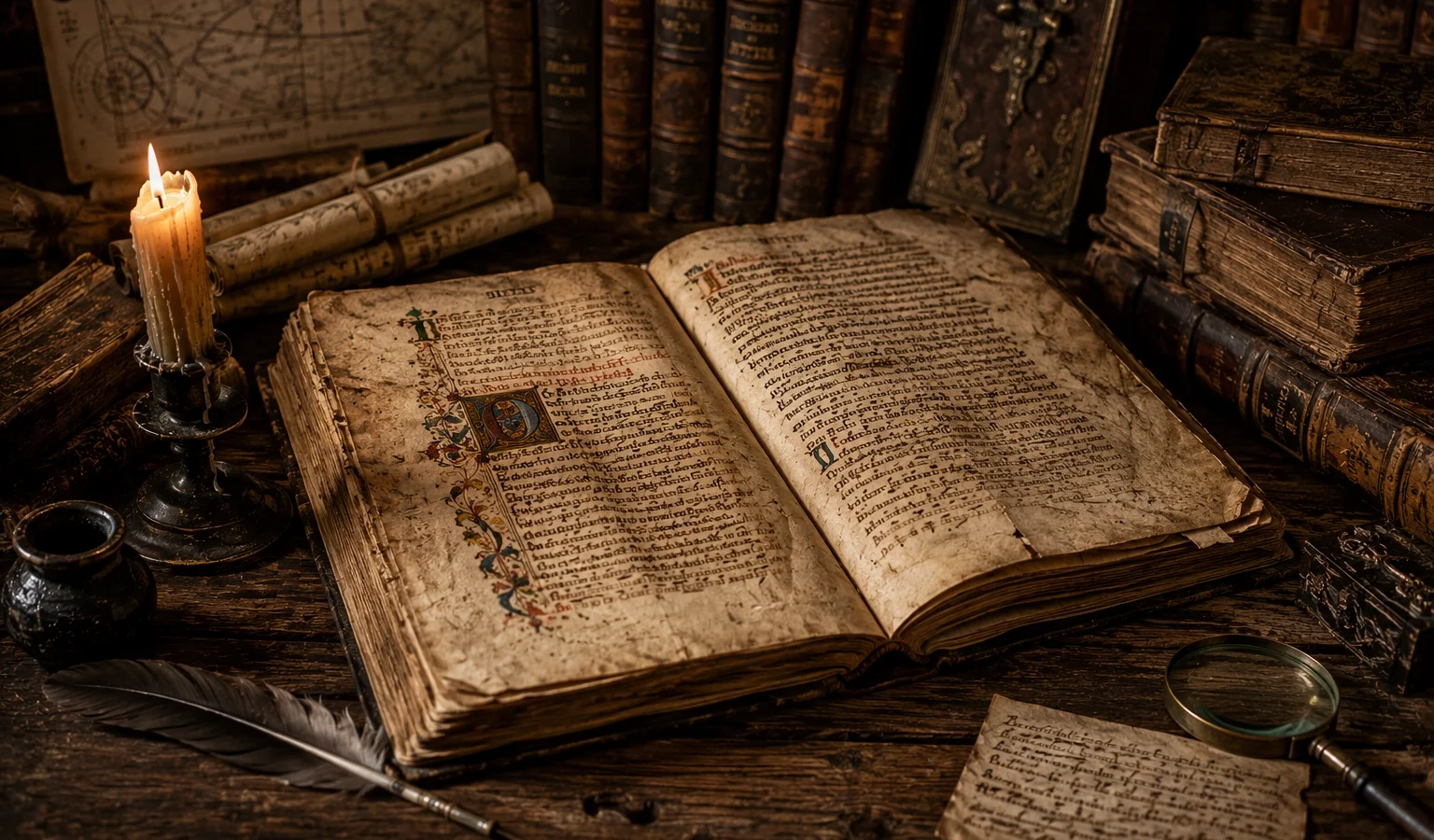
This is one reason forgotten manuscripts exert such pressure on the imagination. They place survival beside loss. A page is present, but the world that gave the page its first meaning is only partly recoverable. The object offers contact without restoration.
The attraction becomes even stronger when the manuscript is incomplete. A missing leaf, an erased name, a damaged ending, or a line interrupted by water can draw more attention than pages that survived intact. The absence becomes active because the reader knows enough to recognize that something is missing.
Lucifer Heritage approaches these objects as material traces rather than props for conspiracy. The old page does not need to contain forbidden wisdom in order to matter. Its real mystery is often quieter: someone made marks because something needed to be remembered, copied, taught, corrected, owned, prayed, proved, or passed forward.
A forgotten manuscript fascinates because it survives as evidence of a world that can no longer explain itself.
A Manuscript Is Evidence of a Hand
Printed books can feel intimate, but a manuscript brings the act of writing much closer to the eye. Ink thickens where the pen slowed. A correction appears between lines. One letter leans differently from the next. A word is crossed out but remains legible underneath. A second hand enters later with a note or change.
The page preserves language and action at the same time.
This physical proximity is central to the fascination of forgotten manuscripts. The reader is not encountering words alone. They are encountering the trace of someone moving across a surface. Even formal scripts were produced by bodies that became tired, rushed, careful, distracted, trained, or uncertain.
The handwriting may reveal little about personality in any reliable psychological sense, but it still records movement. The mark proves that a hand was here.
Before Printing, Books Were Material Labor
Before mechanical printing became widespread in Europe, books had to be written, copied, decorated, assembled, and bound by hand. The Metropolitan Museum of Art describes medieval books as handmade objects that could function as texts, works of art, devotional objects, and symbols of knowledge or status.
This material history changes how we understand the old page. Text was not weightless. It belonged to parchment or paper, ink, pigment, thread, boards, leather, tools, desks, lamps, workshops, monasteries, courts, households, and long hours of labor.
Some manuscripts were plain and practical. Others were lavishly illuminated with gold, silver, painted initials, borders, and miniature scenes. The difference in cost and purpose could be enormous, yet both kinds survive as evidence of human work.
Forgotten manuscripts remind us that knowledge once depended on physical endurance. A page could burn, mold, tear, fade, be eaten by insects, be cut apart, reused, stolen, hidden, inherited, or simply discarded.
Survival Is Never Neutral
Archives can create the illusion that the past has been stored for us in orderly form. In reality, survival is uneven.
Documents remain because of material durability, climate, money, collecting practices, institutional priorities, family inheritance, legal requirements, political change, war, theft, conservation, cataloguing, and chance. Other texts disappear because none of those conditions protected them.
This asymmetry is essential. A surviving manuscript is evidence of presence and absence at once.
When we study forgotten manuscripts, we are looking at what remained after countless other objects were lost. That should produce curiosity, but also humility. The archive is not the past itself. It is a surviving arrangement of fragments.
The Missing Context Is Part of the Mystery
A manuscript can preserve words while losing the conditions that once made them easy to understand.
A name may appear without biography. A place may be written under an older spelling. A joke survives after the audience has vanished. A devotional instruction remains while the local practice around it has changed. A symbol is repeated, but the reader who understood the system left no explanation.
Scholarship tries to rebuild context through comparison, language, provenance, material analysis, related documents, and historical evidence. Yet some gaps remain permanent.
This is where forgotten manuscripts become particularly powerful for the imagination. The reader has enough evidence to approach the past but not enough to possess it completely.
The responsible response is neither to invent certainty nor to dismiss the gap as useless. The gap is part of what the object has become.
Why Damage Makes Time Visible
Modern reproductions often remove the physical drama of age. A clean digital image can make a page appear almost timeless. The original object tells a more complicated story.
Stains, tears, faded ink, insect damage, repaired bindings, trimmed margins, missing leaves, rubbed pigment, and fingerprints reveal use and survival. These marks are not decorative effects added to make the manuscript look mysterious. They are material history.
The object has been stored, handled, carried, neglected, repaired, rebound, conserved, and sometimes misunderstood.
This is why damaged forgotten manuscripts can feel so immediate. Time is no longer an abstract number attached to a catalogue entry. It has altered the surface.
Margins Create a Second Archive
Many old books contain more than the text they were originally made to carry.
Readers add corrections, glosses, ownership inscriptions, family dates, doodles, underlining, symbols, pointing hands, pen trials, calculations, and comments. These traces can reveal how a text was actually used rather than merely what it was supposed to say.
A page with marginalia therefore contains at least two histories: the official text and the history of attention around it.
This is explored in detail in The Mystery of Symbolic Marginal Notes in Old Books. A marked page can preserve disagreement, devotion, boredom, study, inheritance, and private systems of notation long after the reader is gone.
For forgotten manuscripts, the margin can be as revealing as the center. It shows that reading was never completely passive.
The Fantasy of the Lost Secret
Old manuscripts attract one of the most persistent fantasies in popular culture: the hidden text that changes everything.
The suppressed doctrine, the forbidden book, the lost map, the secret genealogy, the coded ritual, the document that overturns accepted history. Such stories are effective because they combine secrecy with material evidence. A real object appears to promise access to a deeper version of reality.
Archives do sometimes contain overlooked or newly identified material, and discoveries can matter greatly. Yet most forgotten manuscripts do not reveal world-changing secrets. They may preserve administration, correspondence, local history, recipes, devotional texts, copied literature, legal records, exercises, drafts, or minor variants.
The quieter material can be historically more valuable than the sensational fantasy.
A merchant’s account may reveal daily economic life. A family Bible may preserve births and deaths. A copied prayer may show regional practice. A student’s correction may illuminate teaching. A damaged letter may provide the only surviving voice connected with one small event.
The past does not need a secret center in order to remain mysterious.
Unknown Authorship and the Voice Without a Face
An anonymous manuscript creates a particular kind of distance.
When an author is known, biography begins to gather around the text. Dates, relationships, profession, education, location, and other works can help explain what the page belongs to. When the writer or copyist is unknown, the text feels less settled.
Unknown authorship can have many causes. A work may never have been signed. The name may have been lost with a missing leaf. The copyist may not have been the original author. Several people may have worked on the same volume.
In forgotten manuscripts, anonymity can increase imaginative pressure, but it should not be treated as evidence of deliberate secrecy. Sometimes the face is missing simply because preservation was incomplete.
Multiple Hands Make One Object More Complicated
Some manuscripts record the work of more than one person.
A scribe copies the main text. Another corrects it. A later owner adds a note. A scholar inserts a reference. A family member records a death. A librarian adds a shelfmark. A conservator later documents treatment.
The manuscript becomes layered.
This is one reason forgotten manuscripts resist the idea of a single pure moment of creation. An old book can continue changing for centuries. Its history includes the people who made the text and the people who carried it forward.
The object may be less like a sealed message and more like a room repeatedly entered by different generations.
Illumination Turns Reading Into Visual Culture
Illuminated manuscripts show how text and image can become inseparable.
The Metropolitan Museum of Art documents manuscript traditions in which initials, borders, miniatures, gold, and color transformed the page into a visual environment. Decoration could mark status, devotion, narrative sequence, liturgical use, or artistic ambition.
These pages are especially important because modern readers can be tempted to treat them as pure atmosphere. Their beauty is real, but it belongs to specific historical practices of bookmaking and use.
When forgotten manuscripts contain illumination, the image can preserve cultural information that the words alone do not. Clothing, gesture, architecture, plants, tools, religious scenes, and visual conventions may all contribute to the object’s history.
The Fragment Can Feel More Powerful Than the Whole
A complete text gives satisfaction. A fragment creates pressure.
A torn page or missing ending tells the reader that something existed beyond the visible edge. The mind begins to reconstruct possibilities even when the evidence does not allow a final answer.
This is one reason fragments resemble memory. Human memory often preserves a room, a smell, a sentence, a face, or a gesture without preserving the whole day around it.
Forgotten manuscripts can feel emotionally true for the same reason. Their incompleteness resembles the way the past survives inside people: unevenly, selectively, and with gaps that cannot always be repaired.
The missing portion should not be filled casually. Sometimes the most honest scholarly conclusion is that the lost part is unknowable.
Unfinished Manuscripts Preserve the Act of Making
A finished book tends to hide its discarded possibilities. A draft can expose them.
Crossed-out sentences, rewritten passages, alternative openings, incomplete sections, and abrupt endings show that a text was once unstable. The author had not yet made every decision.
This gives unfinished forgotten manuscripts a special energy. The writer appears in process rather than as a finished historical figure. We see hesitation, revision, change of direction, and sometimes exhaustion or interruption.
An unfinished page can feel almost contemporary because creative uncertainty has not been polished away.
Private Writing Creates an Ethical Problem
Not every manuscript was intended for the audience that eventually reads it.
Letters become archival collections. Diaries enter libraries. Private notebooks become research materials. Drafts and personal papers may be catalogued long after the writer’s death.
Preservation makes historical study possible, but it can also expose intimacy that was never meant to become public.
A responsible fascination with forgotten manuscripts should therefore include an ethical question: what is the difference between historical value and voyeurism?
There is no single answer. Legal status, archival policy, cultural context, living descendants, donor restrictions, privacy, and scholarly significance can all matter. The point is to remember that the object may preserve a person, not merely information.
Ownership, Removal, and the Ethics of Recovery
Discovery is not always innocent.
Manuscripts can have complicated histories of private collecting, sale, theft, war, religious conflict, colonial extraction, displacement, inheritance, and institutional acquisition. A beautiful page may have travelled under circumstances that deserve investigation.
When forgotten manuscripts reappear, questions of provenance can matter as much as the text itself. Who made the object? Who preserved it? Who owned it later? Was it removed legally? Does another community claim cultural or historical connection to it?
These questions do not destroy wonder. They prevent wonder from becoming careless.
Preservation Is the Quiet Work Behind Discovery
Discovery receives attention because it creates a dramatic story. Preservation is less visible.
Archives and libraries spend enormous effort on housing, stabilization, conservation, environmental control, cataloguing, disaster planning, storage, and digitization. The National Archives describes preservation as work intended to prolong the usable life of records and reduce physical or chemical deterioration.
The British Library similarly presents digitization as part of a wider effort to make manuscripts and archives available while protecting collections, including records threatened by neglect or physical damage.
Forgotten manuscripts survive because somebody eventually chooses to care for them. The cataloguer, conservator, librarian, archivist, photographer, technician, and scholar are part of the object’s later history.
Preservation is often the opposite of spectacle. It is patience repeated until disappearance has been delayed.
Digitization Changes Who Can Enter the Archive
Digital libraries have transformed access to manuscripts.
A page once available only to specialists able to travel to a reading room can now be examined from another country. The British Library makes thousands of digitized manuscripts and archival documents available online, and other institutions have built large digital collections of their own.
This expanded access matters. Students, independent researchers, artists, writers, family historians, and curious readers can encounter materials that were once physically remote.
Yet a digital image is not the entire object.
Scale, weight, texture, binding structure, repairs, sequence, translucency, smell, and three-dimensional details may be difficult or impossible to experience through a screen. Digitization changes the encounter rather than replacing the manuscript.
For forgotten manuscripts, this distinction is important. The digital image preserves visibility. The physical object preserves material history.
The Manuscript as a Mirror of Mortality
Old manuscripts create a simple reversal that is difficult to ignore.
The person who wrote the page is gone. The page remains.
A fragile object has survived the body that made it. It may be stained or damaged, but it can still carry a correction, signature, prayer, account, or line of music made by someone who could not know who would eventually see it.
This is why forgotten manuscripts can feel haunted without any supernatural claim. The haunting comes from duration. Attention has outlived the person who gave it form.
The wider Lucifer Heritage essay Symbolism of Silence: The Hidden Power of Quiet approaches a related idea: absence does not necessarily empty a place or object of meaning. Sometimes absence makes the remaining trace more precise.
Archives Are Built From Selection
An archive may look like a neutral room full of preserved facts, but every collection reflects selection.
Some materials were considered important enough to keep. Others survived accidentally. Some entered institutions through donation or purchase. Some were excluded by cost, policy, prejudice, war, or neglect. Entire classes of people may be poorly represented because their writing was never collected or was less likely to survive.
This is another reason forgotten manuscripts matter. They remind us that historical silence can be produced by preservation patterns rather than by the absence of human experience.
What is missing from the archive deserves attention, even when it cannot be recovered.
Why Hidden Knowledge Feels So Powerful
Human beings are drawn to sealed things: closed boxes, unread letters, unknown languages, locked rooms, private diaries, and uncatalogued collections.
The attraction is partly narrative. A hidden object creates a threshold. Something may be known after the door is opened that was not known before.
Forgotten manuscripts intensify this feeling because they are real physical objects. The mystery is not imaginary. The text exists. Yet language, damage, missing context, uncertain authorship, or incomplete cataloguing may keep part of its meaning out of reach.
This tension is enough. The manuscript does not need to be magical. It is present and only partly available.
The Hidden Archive Is More Human Than the Perfect Archive
Perfect archives belong more easily to fantasy than to history.
Human collections contain gaps, errors, duplicated records, missing folders, damaged materials, uncertain dates, anonymous hands, contested ownership, and objects nobody has fully studied yet.
That imperfection is not merely frustrating. It is revealing.
The Hidden Archive category of Lucifer Heritage treats such traces as reminders that memory is maintained through fragile systems. The old book, marginal note, damaged church register, photograph, and manuscript all survive in partial forms.
The symbolic power of forgotten manuscripts comes partly from this incompleteness. The fragment feels closer to real memory than the fantasy of total preservation.
A Quiet Method for Reading a Manuscript
Most readers will encounter old manuscripts through a digital collection, exhibition, photograph, catalogue, or scholarly article rather than by handling the original object. A careful method still helps.
- Identify the earliest secure date before relying on legend or appearance.
- Ask whether the named person is the author, copyist, owner, annotator, or later cataloguer.
- Notice the writing surface, ink, decoration, binding, damage, repairs, and missing portions.
- Look for later hands, ownership marks, corrections, or marginal notes.
- Separate what the catalogue establishes from what remains uncertain.
- Ask what provenance is known and whether ownership history is contested.
- Consider what the physical object reveals that a transcription cannot.
- Avoid treating an unknown symbol as occult evidence without context.
- Remember that incomplete evidence may remain incomplete after careful study.
- Allow material beauty and historical caution to exist together.
This method does not decode forgotten manuscripts. It protects them from careless certainty.
Symbolic Observations ✦
- Forgotten manuscripts fascinate because they are simultaneously present and incomplete.
- Handwriting preserves the physical trace of attention even when identity is lost.
- Damage is evidence of material history, not decorative atmosphere.
- Margins can preserve a second archive made by readers, owners, teachers, and families.
- Unknown authorship increases uncertainty but does not prove secrecy.
- Illumination joins text, material, devotion, status, and visual culture.
- Fragments resemble human memory because both preserve selectively.
- Unfinished manuscripts expose revision and creative uncertainty.
- Private papers raise ethical questions when preservation makes intimacy public.
- Provenance matters because survival may include theft, displacement, sale, or contested ownership.
- Digitization expands access without replacing the physical object.
- The archive preserves the past unevenly, so absence must be studied as carefully as survival.
Why the Forgotten Page Still Calls to Us
The enduring fascination of forgotten manuscripts lies in their disproportion.
The surviving page is small. The lost world around it was enormous.
A signature remains after the face is gone. A copied prayer survives after the community that used it has changed. A correction remains after the argument has disappeared. A family date survives after nobody remembers the room where it was written.
The manuscript offers evidence without giving the past back whole.
That limitation is not a failure of the object. It is part of what makes the encounter honest. History reaches us through what survived, what was preserved, and what can still be read carefully.
The better imagination does not demand a forbidden secret from every old page. It asks what human world made the page necessary, what accidents allowed it to survive, and what responsibilities come with reading it now.
The book is opened. The ink has changed. The hand is gone.
The trace remains.
Continue Through the Archive
The Mystery of Symbolic Marginal Notes in Old Books
A study of annotations, manicules, family records, doodles, private symbols, and the unofficial archive created by generations of readers.
Symbolism of Silence: The Hidden Power of Quiet
A reflection on absence, attention, memory, fear, restraint, and the ways silence changes the meaning of what remains.
The Symbolism of Abandoned Churches
An exploration of architecture, former worship, memory, ruin, preservation, and the traces left when a sacred function is interrupted.
The Forgotten History of Candle Rituals
A historical essay on household light, sacred time, vigil, mourning, prayer, and the material traditions gathered around flame.
The Hidden Archive
Continue through essays on old books, vanished readers, manuscripts, marginalia, lost context, damaged records, and the material survival of memory.
Further Reading & Sources
- The Metropolitan Museum of Art: The Art of the Book in the Middle Ages
An overview of handmade medieval books as texts, artworks, devotional objects, and material expressions of knowledge. - The Metropolitan Museum of Art: Manuscript Illumination in Northern Europe
Historical context for illuminated manuscripts, courtly patronage, artists, book production, and the visual culture of decorated pages. - British Library: Digitised Manuscripts and Archives
A public portal providing access to thousands of digitized manuscripts and archival documents from collections across different periods and regions. - British Library: Archives and Manuscripts Catalogue
Catalogue access to manuscripts, archival documents, private papers, maps, music manuscripts, and related historical collections. - US National Archives: Preservation Terms
Professional definitions explaining preservation as work that prolongs the usable life of records and reduces physical and chemical deterioration. - US National Archives: Preserving the Past, Keeping Pace with the Future
An institutional overview of preservation programs, conservation, storage, and the practical work required to keep archival records usable. - Library of Congress: Manuscript Preservation
Examples of manuscript conservation and preservation work within a major national collection.