May 21, 2026
Why Humans Attach Meaning to Ritual Objects
Ritual objects hold meaning because human beings place memory, attention, fear, hope, identity, and symbolic order into material things.
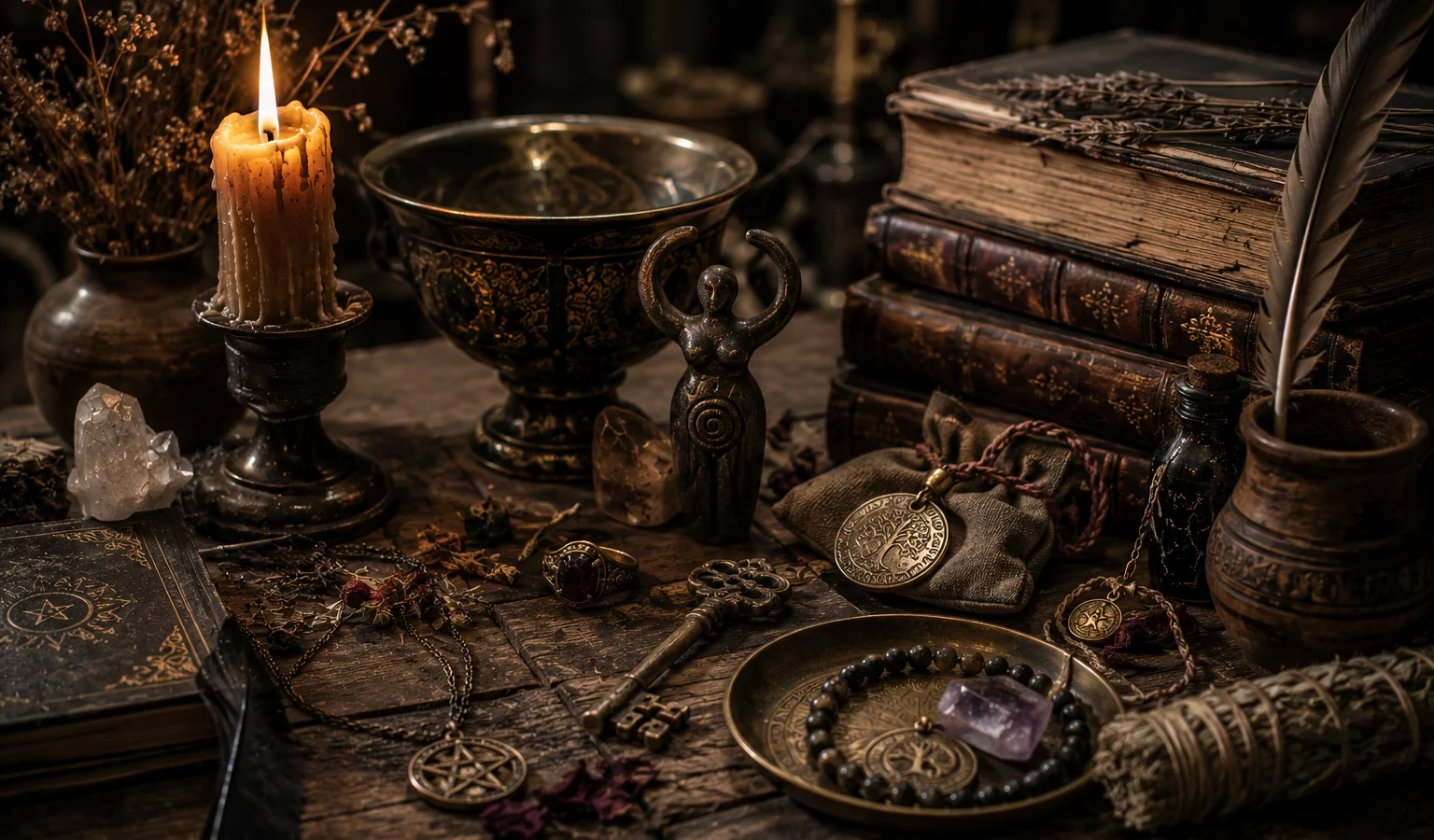
A ritual object is rarely only an object.
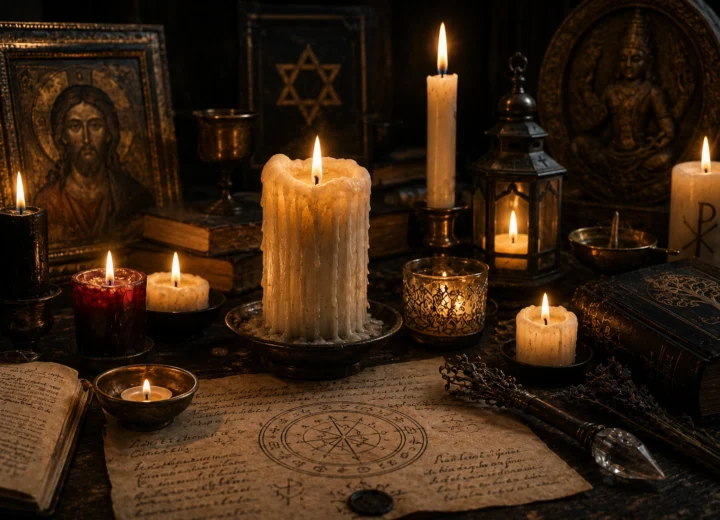
It may be a candle, a cup, a ring, a stone, a bowl, a knife, a book, a rosary, a mask, a cloth, a small figure, a vessel, a key, a branch, a photograph, or something so ordinary that no museum would pause before it. Yet in the right hands, at the right moment, under the right pressure of memory, it becomes more than its material surface.
It begins to hold attention.
This is the quiet mystery of ritual objects. They do not need to be expensive, rare, ancient, or officially sacred to become meaningful. Their power often comes from relation: who touched them, where they were placed, what was spoken near them, what fear they contained, what grief they witnessed, what hope was repeated through them.
Human beings attach meaning to ritual objects because invisible life needs visible anchors. Memory is fragile. Emotion is unstable. Belief changes. Fear has no shape until something holds it. A ritual object gives the hand a place to meet what the mind cannot easily carry.
This does not mean the object performs miracles. Lucifer Heritage does not treat objects as guaranteed forces or supernatural machines. The deeper truth is more subtle: objects become meaningful because human beings pour attention, repetition, story, touch, and symbolic order into them.
A stone remains a stone.
But a stone placed on a grave for twenty years is no longer only geology.
A ritual object does not become powerful because it escapes matter. It becomes powerful because matter learns to hold meaning.
The Object as a Vessel of Attention
Attention changes objects.
Not physically, at first. The candle remains wax. The ring remains metal. The cup remains clay. But attention alters the relationship between the person and the thing. The object begins to gather associations. It becomes easier to notice. It seems to stand apart from the surrounding clutter. It gains a kind of gravity.
This is why ritual objects so often sit in specific places: on altars, shelves, desks, windowsills, graves, bedside tables, mantels, temples, ceremonial tables, or inside boxes reserved for meaningful things. Placement separates them from ordinary use. The object is no longer merely available. It is set apart.
To set something apart is one of the oldest symbolic gestures. It says: this matters. This is not to be handled carelessly. This belongs to a different order of attention.
The object becomes a vessel not because it contains a hidden mechanism, but because it organizes perception. A person sees it and remembers. Touches it and steadies. Moves it and marks a threshold. Lights it and begins. Covers it and ends.
Meaning does not always need speech. Sometimes it needs a surface.
Why the Hand Needs What the Mind Cannot Hold
The mind is often too abstract for sorrow, fear, longing, or transformation.
A person may understand that someone has died, but still need a photograph, a ring, a coat, a letter, a cup, a grave marker, a candle. A person may know they are beginning again, but still need to clear a table, place a stone, open a notebook, burn a page, wear something specific, or carry a small object through the first difficult days.
The hand needs what the mind cannot hold alone.
This is one reason ritual objects appear in mourning, prayer, healing customs, initiation, marriage, childbirth, divination, seasonal rites, protection practices, domestic traditions, and private acts of remembrance. They make the invisible touchable.
Research on object attachment notes that possessions can become extensions of identity, memory, security, and emotional life. Such objects may carry meaning not because they are objectively special, but because they are woven into personal experience.
A ritual object gives emotional material a body. It allows someone to do something when the inner life is too large for thought alone.
That action may be simple.
Lighting. Holding. Washing. Placing. Covering. Carrying. Returning. Opening. Closing.
Through the object, feeling enters form.
When Ordinary Things Become Ritual Objects
Not every meaningful object begins as sacred.
Many begin as ordinary things.
A grandmother’s cup becomes part of morning remembrance. A small notebook becomes the place where difficult years were survived. A coin carried through migration becomes a private emblem of endurance. A candle lit every winter becomes the quiet center of a family tradition. A stone taken from a childhood river becomes a small archive of origin.
The transformation happens through use, memory, repetition, and emotional charge.
| Ordinary Object | Ritual Transformation | Meaning It May Hold |
|---|---|---|
| Candle | Lit at a repeated time or threshold | Memory, vigil, attention, beginning |
| Cup | Used in quiet reflection or shared ceremony | Hospitality, care, continuity, presence |
| Stone | Carried, placed, or kept from a meaningful place | Grounding, origin, endurance, witness |
| Ring | Worn as vow, inheritance, or bond | Continuity, identity, promise, loss |
| Book | Opened during reflection, study, prayer, or memory | Guidance, knowledge, inheritance, inner order |
| Cloth | Used to cover, wrap, protect, or set apart | Boundary, care, secrecy, reverence |
| Key | Kept after a departure, return, or change | Access, threshold, closure, belonging |
This table is not a dictionary. Objects do not have one fixed meaning for all people. A candle may represent grief to one person and celebration to another. A ring may hold love, duty, imprisonment, inheritance, or freedom depending on the story around it.
Ritual objects live through context.
The object receives meaning from the life that approaches it.
The Difference Between Decoration and Devotion
A room may contain many beautiful objects that mean very little.
A ritual space may contain one plain object that means almost everything.
This distinction matters because modern culture often turns symbols into decoration. Moons, eyes, snakes, candles, crystals, skulls, books, keys, feathers, and stars appear on endless products. They may look atmospheric, but atmosphere alone does not make an object meaningful.
Decoration pleases the eye.
Devotion changes the way the object is approached.
A decorative candle is chosen for scent, color, or mood. A ritual candle may be lit at a threshold, in memory, before difficult work, during mourning, or as part of a repeated practice. The difference is not in the wax. It is in the attention.
Ritual objects should not be reduced to aesthetic accessories. Their symbolic dignity depends on relationship, not style. A polished object can be empty. A damaged object can be sacred. A cheap object can become irreplaceable because it stood near the moments that formed a life.
The question is not: does this object look mystical?
The better question is: what kind of attention does this object gather?
Why Ritual Objects Often Feel Like Witnesses
Objects remain when moods pass.
This gives them a strange authority. A person may change their mind, lose faith, recover from grief, leave a house, end a relationship, begin another life, or grow into a different self. The object remains there, bearing silent continuity.
This is why ritual objects often feel like witnesses.
A ring witnessed the marriage and the years after it. A candleholder witnessed repeated vigils. A bowl witnessed offerings, meals, tears, prayers, or family gatherings. A book witnessed nights when someone could not sleep. A key witnessed both belonging and departure.
The object does not remember as a human remembers. Yet it holds marks of proximity. Scratches, stains, fading, worn edges, scent, repair, and placement become a kind of material testimony.
Museums understand this power. Ritual vessels, masks, musical instruments, reliquaries, charms, statues, altars, ceremonial tools, and grave goods often move viewers not only because of their craftsmanship, but because they imply actions once performed around them. Britannica notes that ceremonial objects across religions and cultures are often both utilitarian and symbolic, used in ritual and sacred contexts.
A ritual object is not only looked at.
It suggests the gesture that once touched it.
Material Culture and the Soul of Things
Objects are never only objects in human culture.
They carry social relationships, inherited meanings, economic realities, family histories, power structures, private memories, and symbolic patterns. Archaeology and anthropology have long treated material culture as a way to understand how people live, remember, worship, trade, mourn, govern, and imagine.
This matters for ritual objects because ritual is rarely purely mental. It needs bodies, places, tools, gestures, textures, sounds, colors, and forms. A ritual without material presence can exist, but many human beings instinctively seek something to touch, lift, arrange, wear, break, bury, burn, carry, or preserve.
Academic discussions of material religion emphasize that material culture does not merely illustrate belief; it participates in how belief is practiced, represented, and experienced.
This is why a ritual object can feel more powerful than an abstract idea. The idea may be true, but the object gives it weight. The belief may be spoken, but the object gives it repetition. The memory may be internal, but the object gives it a place in the room.
Human meaning often becomes stronger when it takes material form.
The Ritual Object as a Boundary
Many ritual objects create boundaries.
A cloth marks a surface as set apart. A ring marks a bond. A mask marks a transformation of identity. A candle marks the beginning of a vigil. A threshold object marks entry or departure. A bowl marks receiving. A blade may mark separation. A cord may mark binding or release.
The object does not merely sit within the ritual. It helps define the ritual’s space.
Ritual objects often say: here is the line. Before and after. Inside and outside. Ordinary and set apart. Unspoken and spoken. Held and released. Living and dead. Child and adult. Stranger and member. Old life and new life.
Human beings need boundaries because life is not always clear about when one state has ended and another has begun. A person may be grieving before the funeral. Married before they feel married. Free before they know how to live freely. Changed before others recognize the change.
The object helps mark what emotion alone cannot stabilize.
A ritual object often stands where life has changed faster than language.
Why Some Objects Become Protective
Protective objects appear across cultures: amulets, charms, medals, beads, knots, written prayers, small figures, stones, symbols, garments, and carried tokens. Their specific meanings differ, but their emotional logic is widely recognizable.
Protection is not only a belief about danger. It is also a way of placing fear into form.
When someone carries a protective object, they carry a visible answer to invisible vulnerability. The object may represent divine care, ancestral presence, family love, personal discipline, memory, luck, identity, or simply the steadiness of having something to touch.
Lucifer Heritage treats such objects carefully. A protective object should not be described as a guaranteed shield or mechanical force. That cheapens both the object and the person using it. The more honest reading is symbolic: the object helps the person remember what they are trying to hold close when uncertainty presses in.
Among ritual objects, protective items often reveal the human wish to make courage portable.
Sometimes the object does not remove fear.
It helps fear become bearable enough to pass through.
Memory, Grief, and Objects That Remain
Grief turns ordinary objects into relics.
A coat hanging by the door. A handwriting sample. A cup. A necklace. A tool. A recipe card. A photograph. A chair. A book with a folded page. Such objects may become almost unbearable after loss because they preserve the nearness of someone who is no longer physically present.
This is one of the deepest reasons humans attach meaning to ritual objects. Objects can remain in the place where a person cannot.
In mourning, the object may be touched, kept, hidden, displayed, kissed, moved, boxed away, or placed in a special location. Each action carries meaning. Keeping the object close may preserve connection. Putting it away may create survivable distance. Giving it to another person may continue inheritance. Returning it to the earth may mark release.
None of these gestures is trivial.
They are forms through which grief negotiates with matter.
A grieving person does not need to believe that the object contains the dead in order to feel its power. It contains contact. It contains association. It contains the painful evidence that someone lived in the world and touched things.
That is enough.
Ritual Objects and Identity
Objects help people know who they are.
This may sound shallow until one considers how much of identity is carried through material things: clothing, inherited jewelry, tools of a profession, family photographs, national symbols, religious items, books, instruments, medals, documents, keys, wedding objects, house objects, childhood objects, travel objects.
Objects can declare belonging. They can preserve origin. They can mark transformation. They can also challenge identity when inherited meanings no longer fit.
Ritual objects are especially powerful because they often stand at the crossing of personal and collective identity. A rosary may belong to one hand and a whole tradition. A ceremonial bowl may belong to one family and a cultural lineage. A mask may belong to one performance and a community’s ancestral memory. A wedding ring may belong to one relationship and a larger social grammar of vows.
Psychologist Russell Belk’s work on possessions has been influential in discussions of how objects can become part of the “extended self,” shaping personal identity, memory, and social meaning. The American Psychological Association has discussed this connection between possessions, selfhood, and the emotional lives of objects.
In ritual, the object does not only represent identity.
It helps perform it.
The Danger of Empty Symbolism
Not every object called ritual is meaningful.
Sometimes symbols are borrowed carelessly. Sometimes sacred forms are removed from their cultural context and sold as atmosphere. Sometimes objects are marketed as miracles to people who are frightened, grieving, or searching. Sometimes the language around an object becomes more manipulative than meaningful.
This is where restraint matters.
Ritual objects deserve serious treatment because they touch fear, hope, identity, ancestry, memory, and belief. To handle them cheaply is to turn deep human hunger into decoration or commerce.
An object should not be promised as a cure. It should not be described as guaranteed spiritual power. It should not be used to pressure someone into belief. It should not be stripped of cultural history when that history matters.
The ethical approach is quieter.
Objects may support reflection. They may mark attention. They may hold symbolic meaning. They may become part of a personal practice. They may help create atmosphere, memory, or emotional focus.
But they do not replace judgment, care, responsibility, therapy, medicine, community, or honest action.
A ritual object is a companion to meaning, not a substitute for life.
A Quiet Method for Choosing a Ritual Object
A meaningful object should not be chosen only because it looks impressive.
Begin with the need. What is the object meant to help hold? Memory, mourning, transition, protection, study, courage, gratitude, release, attention, discipline, beauty, belonging?
Then choose something proportionate. The object does not need to be rare. It needs to be honest.
- Choose an object that can be handled respectfully and kept with care.
- Let its material matter: stone, wood, metal, paper, wax, clay, thread, glass.
- Give it a place rather than leaving it among clutter.
- Attach one clear use to it: lighting, holding, writing near, placing, carrying, covering, returning.
- Avoid claiming more power for it than it can honestly bear.
- Allow its meaning to grow slowly through repetition.
This method keeps ritual objects grounded. Meaning does not have to be theatrical. It becomes stronger when it is precise.
A single candle lit with honest attention may carry more symbolic weight than a crowded table assembled for appearance.
When an Object Has Completed Its Work
Sometimes a ritual object must be released.
The object that once helped may later become heavy. A ring may need to be removed. A letter may need to be burned or archived. A mourning object may need to be moved from daily sight. A charm carried through fear may no longer be needed. A symbol inherited from another life may no longer belong to the person one has become.
This does not mean the object failed.
It may mean it completed its work.
Ritual objects can mark endings as well as beginnings. To put an object away with care can be as meaningful as placing it on an altar. To return something to water, earth, fire, a box, a family member, or a private shelf can be a form of closure.
Release should not be careless. If the object carried meaning, its ending deserves form.
The ritual may be simple: clean it, thank it, wrap it, store it, give it away, bury it where appropriate and lawful, or let it leave your life without drama.
Meaning enters through attention.
Meaning can also depart through attention.
Symbolic Observations ✦
- A ritual object becomes meaningful through attention, repetition, memory, and placement.
- Objects help the hand hold what the mind cannot easily carry.
- The same object can mean different things in different lives.
- Decoration becomes ritual only when attention changes the relationship.
- Protective objects often make courage portable rather than removing fear.
- Grief turns ordinary possessions into charged witnesses.
- Ritual objects often mark boundaries: before and after, inside and outside, held and released.
- Objects can support identity by carrying personal and collective memory.
- Empty symbolism begins when objects are used for appearance without responsibility.
- A ritual object should deepen life, not replace action or care.
The Object as a Small Archive
Every meaningful object becomes a small archive.
Not an archive of documents, but of touch. Where it was placed. Who held it. What room it belonged to. What season surrounded it. What was feared near it. What was promised beside it. What grief it absorbed without language.
This is why ritual objects can become difficult to discard. The object may be materially simple, but emotionally dense. Throwing it away may feel like erasing a chapter of life. Keeping it may feel like keeping faith with a former self.
Objects do not remember in the way humans remember. But they give memory a place to return.
A shelf, a drawer, a box, a table, a grave, a pocket, a chain around the neck — these are not merely locations. They are forms of relationship. They tell us how close the meaning must remain.
The object becomes an archive because life has passed through it and left pressure behind.
Why Matter Becomes Meaning
Humans attach meaning to ritual objects because human life is not lived in thought alone.
We need things to touch when the invisible becomes too large. We need objects to mark thresholds, hold memory, gather attention, steady fear, preserve belonging, witness grief, and give form to change. We need matter because meaning without matter can become too abstract to inhabit.
A ritual object does not need to be magical in a crude sense. It does not need to promise certainty. It does not need to perform miracles. Its deeper power lies in relationship.
The object is chosen.
Placed.
Touched.
Repeated.
Remembered.
And slowly, it becomes more than itself.
This is not weakness. It is one of the oldest human forms of intelligence. The human being understands, sometimes before any philosophy explains it, that the world of matter can carry the world of meaning.
A candle is wax.
A ring is metal.
A stone is earth.
A book is paper.
And yet, under the pressure of memory and attention, each may become a small threshold where the visible and invisible meet.
The object remains still.
The hand reaches.
Meaning gathers.
Related Articles
Why Humans Create Rituals During Times of Uncertainty
A calm exploration of repeated gestures, fear, order, and the human need to create form when the future is unclear.
The Candle as a Symbol of Memory and Witness
A reflective essay on small light, vigil, grief, attention, and the quiet dignity of symbols that do not overpower darkness.
Why Old Books and Manuscripts Fascinate Us
A symbolic study of paper, touch, lost voices, marginal notes, archives, and the fragile survival of human memory.
The Door, the Gate, and the Threshold
A study of passages, hesitation, forbidden rooms, and the symbolic moment before crossing into another state of life.
Why Symbols Outlive Belief
A broader reflection on why ancient images and objects continue to speak even when their original systems of belief have changed.
Further Reading & Sources
- Encyclopaedia Britannica — Ceremonial Object
A broad reference on ritual and ceremonial objects, their symbolic and utilitarian roles, and their place across cultures. - Encyclopaedia Britannica — Ritual
Background on ritual as prescribed ceremonial action and a universal mode of human behavior. - Encyclopaedia Britannica — Other Ritual Objects
Information on rosaries, chaplets, and other prayer or ritual objects across traditions. - The Metropolitan Museum of Art — Jegi: Korean Ritual Objects
Museum context for Korean ritual vessels and accessories used in ancestral and state rituals. - Yap & colleagues — Emotional Attachment to Objects
Research discussing object attachment, identity, security, possessions, and emotional meaning. - Insoll — Archaeology and Material Religion
Academic discussion of material culture, religion, symbols, objects, and ritual practice. - Moro — Material Culture and Psychology
A scholarly look at objects, physical properties, cultural meaning, and psychological interpretation. - American Psychological Association — What Our Possessions Mean to Us
A conversation on possessions, identity, collecting, emotional value, and the psychology of objects. - Library of Congress — American Folklife Center Collections
Folklore and cultural memory collections useful for studying ritual, objects, inherited practices, and symbolic life. - JSTOR — Ritual Objects and Material Culture
Academic search entry point for scholarship on ritual objects, material culture, symbolic practice, and religious studies.