May 14, 2026
Why Humans Create Rituals During Times of Uncertainty
Rituals during uncertainty reveal how people create order, memory, and symbolic calm when life becomes unstable and ordinary control begins to fail inside.

Why Humans Create Rituals When Life Becomes Uncertain
Uncertainty does not always arrive with thunder.
Sometimes it enters quietly: a letter not yet answered, a diagnosis not yet named, a war heard through distant headlines, a house where someone has begun to speak more softly than before. The future remains technically open, but it no longer feels spacious. It feels unfinished, unstable, suspended.
In such moments, people often begin to repeat small actions.
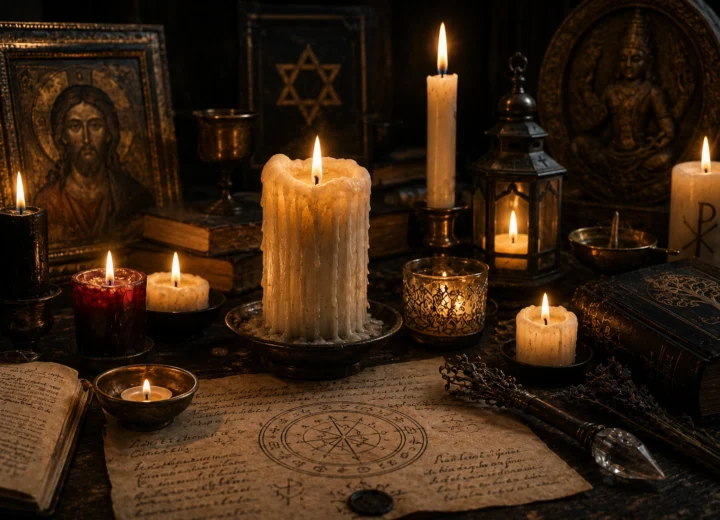
They make tea in the same cup. They touch the same object before leaving the house. They light a candle on a particular date. They arrange a table before difficult news. They visit a grave. They wear a certain color. They say the same words before a journey, a performance, a meeting, an operation, a departure.
From the outside, these gestures may appear irrational. From the inside, they often feel necessary. They do not solve the crisis. They do not command the future. They do not turn disorder into certainty. But they give the human being a form in which to stand while certainty is absent.
This is the quiet power of rituals during uncertainty. They create a border around fear. They place rhythm where time has become shapeless. They allow the body to act when the mind cannot yet conclude.
A ritual is not always religious. It is not always ancient. It is not always public. Sometimes it is no more than a repeated gesture made with meaning. Yet when life becomes unstable, such gestures can become the small architecture of endurance.
A ritual does not always change the world. Often, it changes the way a person remains present inside the world.
The Human Need for Form When the Future Blurs
Human beings do not suffer only because something bad has happened. They also suffer because something may happen, because something is not yet known, because the next door has not opened and the old one has already closed. Uncertainty stretches the mind across possibilities. It asks the imagination to inhabit several futures at once.
This is exhausting.
The uncertain future has no clean edge. It cannot be fully prepared for, because its shape is still hidden. The mind tries to map it anyway. It rehearses conversations, losses, mistakes, opportunities, dangers. It builds small theatres of what may come. The result is often not wisdom, but agitation.
Rituals during uncertainty offer form where thought has become too fluid. They do not remove the unknown, but they give the body a sequence: first this, then this, then this. A candle is placed. A hand is washed. A name is spoken. A room is arranged. A meal is prepared. A page is opened. The gesture becomes a railing in fog.
There is dignity in this. A person who cannot control the outcome may still control the manner of approach. Ritual gives uncertainty a threshold. It says: before I enter what I cannot know, I will gather myself in this way.
Ritual Is Older Than Explanation
Ritual is one of the oldest human languages. Long before modern psychology gave names to stress, anxiety, grief, or cognitive overload, human communities had already created patterned actions for birth, death, harvest, marriage, illness, mourning, oath, exile, return, and danger.
These actions were not always designed to express belief in a simple way. Some rituals protected memory. Some marked social bonds. Some organized fear. Some separated one stage of life from another. Some placed the individual inside a community larger than personal panic.
This is why the study of ritual belongs to anthropology, psychology, religious studies, art history, folklore, and mythology at once. Ritual is too large to belong to one discipline. It is behavior, symbol, memory, social structure, emotional regulation, theatre, and inheritance.
When people create rituals during uncertainty, they are not inventing a strange exception to rational life. They are returning to an old human method: making meaning visible through repeated form.
A ritual may be spoken, silent, private, collective, sacred, secular, inherited, improvised, elaborate, or almost invisible. What matters is not complexity. What matters is that the action carries more meaning than its practical function alone.
To pour tea may be ordinary. To pour tea every evening beside a hospital window while waiting for news may become ritual.
The Difference Between Ritual and Habit
Habit and ritual can look almost identical from the outside. Both involve repetition. Both may happen at a particular time. Both may use familiar objects. Yet they are not the same.
A habit is usually efficient. It saves attention. It allows life to continue without constant decision. One locks the door, brushes the teeth, checks the stove, makes coffee, answers messages. Habit belongs to the economy of daily functioning.
A ritual is charged with meaning. It does not merely save attention; it gathers attention. It asks the person to notice that something matters. Even when the action is simple, it carries symbolic weight.
| Habit | Ritual |
|---|---|
| Usually practical | Symbolically charged |
| Reduces attention | Concentrates attention |
| Often automatic | Often intentional |
| Maintains routine | Marks meaning, transition, or emotional pressure |
| Can be forgotten without consequence | Feels significant when broken or altered |
This distinction helps explain why rituals during uncertainty feel so powerful. They are not mere habits added to fear. They are meaningful forms placed around fear, so the person does not dissolve entirely into it.
A habit says: life continues.
A ritual says: this moment matters, and I must meet it consciously.
Why Uncertainty Produces Repetition
When the world becomes unstable, repetition becomes attractive. It is predictable. It has a beginning and an end. It can be completed. It asks nothing from fate. A repeated gesture may not alter the external situation, but it creates a small zone where sequence still holds.
This is one reason rituals during uncertainty appear in so many contexts: before battles, before exams, before surgery, before journeys, before performances, before harvests, before negotiations, before funerals. The human being stands near an outcome that cannot be fully controlled, and so creates a controlled form nearby.
The ritual does not need to be intellectually convincing to have emotional force. A singer may know that a pre-performance gesture does not guarantee the voice. A surgeon may know that a personal preparation ritual does not command the body on the table. A family may know that lighting a candle does not reverse death. And still the gesture matters.
It matters because uncertainty often steals proportion. Ritual restores proportion. It gives the fear a place to stand, rather than allowing it to flood the whole inner room.
Repetition is also a form of memory. By repeating an action, the person says: I have been here before, or others have been here before me. This moment is frightening, but it is not without lineage.
The Ritual as a Boundary Around Fear
Fear without boundary becomes atmosphere. It fills the room, enters ordinary objects, changes the taste of food, distorts the future, and makes the body listen for danger even in silence.
A ritual places a frame around that fear.
Not a prison. A frame.
To begin mourning with certain words, to prepare the body for burial, to cover mirrors, to bring food to the grieving, to sit together after loss — these actions do not remove death. They prevent death from becoming only chaos. They say: we cannot undo what has happened, but we can meet it through form, witness, and continuity.
In private life, the same principle appears in smaller ways. A person awaiting test results may walk the same path each morning. Someone rebuilding after betrayal may clean a room before making a decision. A family in crisis may return to one shared meal each week, not because dinner solves the crisis, but because it keeps a human table from disappearing.
Rituals during uncertainty create a symbolic border: here is the fear, and here is the one who observes it. The ritual allows a person to relate to uncertainty rather than be swallowed by it.
Where fear becomes formless, ritual gives it a vessel.
Objects, Gestures, and the Weight of Meaning
Rituals rarely exist without material anchors. A cup, ring, stone, photograph, book, garment, candle, table, doorway, thread, bowl, key, or piece of bread may become the object through which invisible pressure receives visible form.
The object is not powerful because it is magical in a crude sense. It is powerful because meaning has settled into it through repetition, memory, touch, and attention. The same cup used every morning during a year of illness may later carry more emotional history than an expensive heirloom. A plain notebook may become a private altar of decisions. A doorway may become the place where departures are always marked.
This is why museum objects associated with ritual can feel unusually charged. Even when removed from their original setting, they suggest gestures once repeated by hands, voices, communities, and bodies that needed to hold their world together.
Rituals during uncertainty often gather around objects because the mind needs something stable to touch. Thought moves too quickly. Fear multiplies too easily. An object remains. It has weight, texture, temperature. It answers the hand with presence.
In this sense, ritual is not an escape from the body. It is a return to the body when abstraction has become unbearable.
Ritual, Community, and the Shared Unknown
Some uncertainty is private. Some uncertainty belongs to an entire community. War, plague, famine, migration, political collapse, environmental disaster, and collective grief do not unsettle only individuals. They disturb the shared imagination of a people.
In such times, communal ritual becomes more than tradition. It becomes a way of gathering scattered fear into a shared form. People assemble. They sing, march, mourn, eat, listen, light, wash, carry, bury, plant, remember. These acts do not erase danger, but they prevent isolation from becoming total.
One person’s fear can become unbearable when it has no witness. Ritual creates witness.
This is one of the social functions of rituals during uncertainty: they remind individuals that their fear does not have to remain solitary. The gesture says: we stand here together, even if none of us knows what comes next.
Community rituals also protect continuity. When institutions tremble, when ordinary schedules fail, when history seems to have become unstable, repeated public forms can say: not everything has vanished. Some pattern remains. Some memory is still shared. Some table can still be set.
Of course, communal rituals can also be misused. They can harden into empty performance, manipulation, exclusion, or spectacle. A serious symbolic reading must admit this. Ritual is powerful because it organizes meaning; anything that organizes meaning can be used with care or with violence.
The Mythological Shape of Rituals During Uncertainty
Myth and ritual have always stood near each other. Myth gives story to the threshold. Ritual gives action to the story.
When a person steps into uncertainty, the ordinary world begins to resemble mythic space. The road becomes more than a road. The door becomes more than a door. The journey, the waiting room, the court, the hospital corridor, the airport gate, the funeral table — all become thresholds between one form of life and another.
This is why rituals during uncertainty often feel larger than their practical content. They place the individual inside an ancient pattern: departure, ordeal, waiting, crossing, return, loss, renewal, witness.
A wedding ritual does not merely celebrate affection. It marks the crossing from one social state into another. A funeral ritual does not merely dispose of the dead. It teaches the living how to remain in a world from which someone has disappeared. An initiation does not merely test endurance. It dramatizes the cost of becoming different.
Even secular rituals inherit this mythic structure. Graduation robes, courtroom procedures, national memorials, hospital routines, military ceremonies, memorial walks, recovery anniversaries, and family customs all reveal the same human impulse: the threshold must be marked, or the transition may feel unreal.
Uncertainty becomes more bearable when it is placed inside a story of crossing.
The Psychology of Control Without Illusion
There is a delicate line between ritual and illusion.
Healthy ritual gives form, attention, and emotional containment. It does not require the person to believe that the gesture controls reality. It may create calm, dignity, focus, and continuity while leaving the future free to unfold as it will.
Unhealthy ritual becomes coercive. It demands repetition through fear. It threatens punishment if performed incorrectly. It reduces life rather than deepening it. It may become entangled with compulsive anxiety, especially when the action is no longer chosen but required by terror.
This distinction matters. Rituals during uncertainty can help a person endure ambiguity, but they should not become a private prison. A quiet ritual before difficult news is one thing. A compulsive action that must be repeated endlessly to prevent imagined catastrophe is another.
The symbolic mind needs form, but it also needs freedom. A ritual should create enough order to help a person breathe. It should not create a second uncertainty: the fear of performing the ritual wrongly.
The question is not only, “Does this ritual calm me?”
The deeper question is: “Does this ritual return me to life, or does it make life smaller?”
A Quiet Method for Creating Meaningful Ritual
A meaningful ritual does not need theatrical language, expensive objects, or borrowed solemnity. It should be proportionate to the moment. A ritual that becomes too elaborate may begin to serve its own vanity rather than the person who needs it.
Begin with the uncertainty itself. What is actually unknown? What feeling does it produce: grief, fear, guilt, anticipation, helplessness, exposure, transition, waiting? Then choose a simple action that gives the feeling a form without pretending to solve it.
For private rituals during uncertainty, the following method can remain quiet and precise:
- Choose one repeated action: lighting a candle, writing a line, washing hands, walking a path, preparing tea, arranging a table.
- Choose one time or threshold: before sleep, before a difficult call, after news, on an anniversary, before leaving home.
- Choose one sentence of intention, not command: “I do not know what comes, but I will meet it with steadiness.”
- Keep the ritual brief enough to remain honest.
- Let it end clearly, so the rest of life can continue.
The end is important. A ritual should close. It should return the person to the world, not remove them from it.
When created with restraint, ritual becomes a small chamber of attention. It does not claim power over fate. It gives the human being a way to stand before fate without becoming shapeless.
Symbolic Observations ✦
- Ritual begins where ordinary action receives symbolic weight.
- Uncertainty makes repetition attractive because repetition has edges.
- A ritual may calm the body before the mind has found words.
- Objects become ritual objects when memory, touch, and meaning gather around them.
- Communal ritual turns private fear into witnessed fear.
- Thresholds often require ritual because transition is emotionally unstable.
- A healthy ritual creates form without pretending to control reality.
- An unhealthy ritual becomes a demand rather than a support.
- The smallest gesture can become meaningful if it is honest, repeated, and consciously held.
- Rituals during uncertainty are not proof of irrationality; they are evidence that human beings need meaning when knowledge is incomplete.
When Ritual Becomes an Archive
Every repeated gesture stores time.
A family recipe made after loss. A yearly visit to the sea. A candle lit on the same date. A song sung before departure. A quiet phrase spoken before opening a difficult letter. These gestures become archives, not because they record facts, but because they preserve emotional continuity.
In this way, rituals during uncertainty often outlive the crisis that created them. What began as a way to survive waiting may become a way to remember who one was while waiting. What began as a form of fear may become a form of gratitude. What began in helplessness may become inheritance.
Some rituals fade when their work is done. Others remain because they have gathered too much meaning to be discarded. A gesture repeated through years becomes a quiet manuscript written by the body. It says: this mattered. This was endured. This was not allowed to vanish without form.
This is why human beings continue to create ritual even in modern, skeptical, technological societies. The need has not disappeared. Only the vocabulary has changed. People still make forms around illness, departure, success, grief, love, failure, and fear. They still require thresholds. They still require witness. They still require gestures that tell the body: the moment is real.
The Order We Make Before the Unknown
Humans create rituals because uncertainty leaves too much without shape.
When the future cannot be known, the hand reaches for form. When thought cannot settle, the body repeats. When fear becomes too large, a gesture gives it a boundary. When loss becomes unreal, ceremony teaches the living how to remain. When change threatens identity, ritual marks the crossing from one life into another.
This is the deeper meaning of rituals during uncertainty. They are not childish attempts to command the invisible. They are not automatically superstition. They are not proof that reason has failed. Often, they are reason’s older companion: symbolic action in the presence of what reason cannot yet resolve.
A ritual says: I do not control the outcome, but I can choose the form of my attention.
It says: I do not know what will happen, but I will not meet the unknown as a scattered thing.
It says: this moment deserves a threshold.
And perhaps that is why ritual endures. Not because humans are unable to live with uncertainty, but because they know, somewhere deeper than argument, that uncertainty without form can become unbearable.
The future remains unopened.
The hand lights the candle, folds the cloth, pours the water, speaks the name.
For a moment, the world has not become certain.
But it has become habitable.
Related Articles
The Symbolism of Thresholds and Doorways
A reflective study of doors, gates, crossings, and the symbolic pressure of standing between one life and another.
Why Humans Seek Signs During Emotional Change
A calm exploration of pattern, meaning, attention, and the human need to read the world when life becomes unstable.
The Candle as a Symbol of Memory and Witness
An atmospheric essay on light, mourning, vigil, attention, and the quiet dignity of small symbolic gestures.
Why Repetition Feels Sacred
A philosophical look at repeated words, repeated actions, prayer, habit, music, and the deep human hunger for rhythm.
The Symbolism of Waiting
A meditation on suspended time, uncertainty, delayed news, and the strange inner life that forms before an answer arrives.
Further Reading & Sources
- Encyclopaedia Britannica — Ritual
A broad reference on ritual as ceremonial, symbolic, and social behavior across human societies. - Encyclopaedia Britannica — Functions of Ritual
Useful background on ritual as symbolic expression, social order, and cultural meaning. - American Psychological Association — 10 Tips for Dealing with the Stress of Uncertainty
Practical psychological context for uncertainty, stress, and attention to what remains controllable. - American Psychological Association — COVID-19 and the Loss of Rituals
A discussion of how disrupted rituals affected grief, weddings, graduations, funerals, and social meaning. - Lang et al. — The Role of Ritual Behaviour in Anxiety Reduction
Academic research on ritual behavior, anxiety reduction, and the psychological effects of structured action. - Legare & colleagues — Ritual Explained
An interdisciplinary overview of ritual as socially stipulated, conventional behavior practiced across cultures. - Krátký et al. — Anxiety and Ritualization
Research exploring links between anxiety, ritualized behavior, attention, and repetitive action. - The Metropolitan Museum of Art — Jegi: Korean Ritual Objects
Museum context for ritual vessels, ceremonial forms, and the material culture of repeated symbolic action. - The British Museum — Greek and Roman Life
Museum material showing everyday objects alongside ritual artifacts connected with worship, weddings, funerals, and public life. - Library of Congress — American Folklife Center Collections
Folklore and traditional culture archives documenting practices, songs, stories, customs, and inherited forms of meaning.