August 16, 2026
Symbolism of Silence: The Hidden Power of Quiet
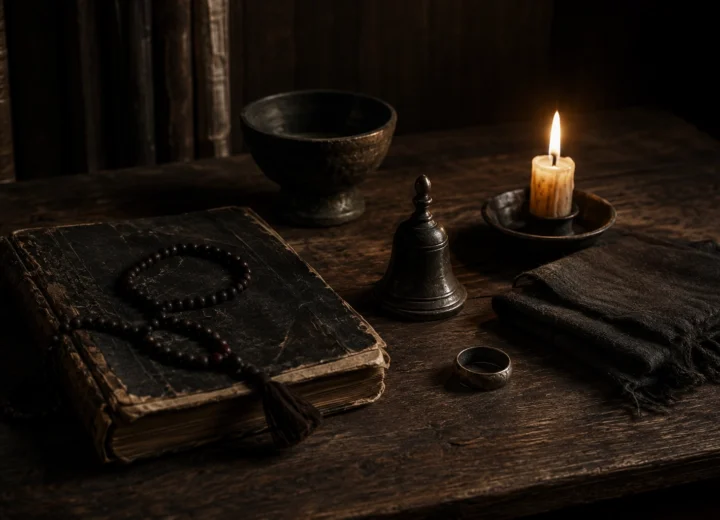
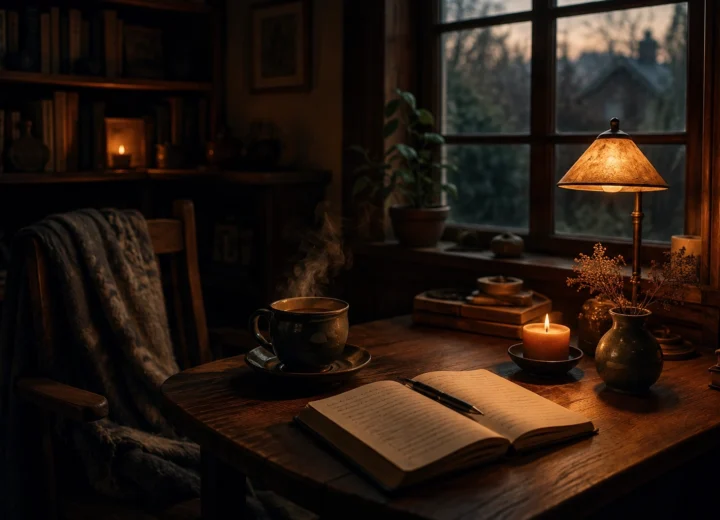
Silence changes the meaning of a place before it changes anything visible inside it. A candle burns on the same table. An old book remains open at the same page. A road still leads toward the same distant buildings. A church wall, a photograph, a worn key, a handwritten note, or a dark window may look exactly as they did a moment earlier. Yet when noise withdraws, attention changes. Objects seem to stand farther apart. Small movements become noticeable. Memory enters the room more easily. What was background begins to acquire weight.
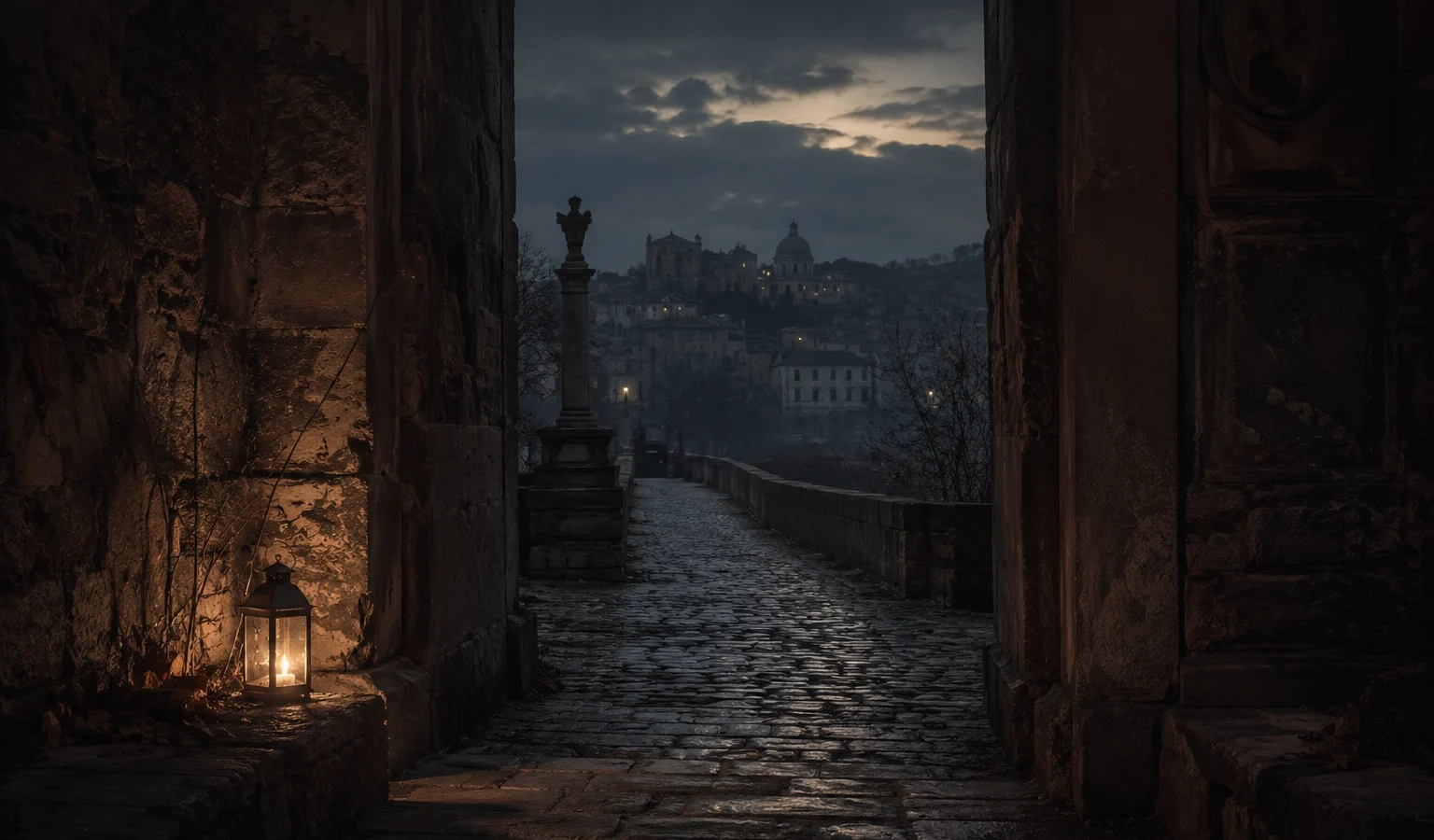
This is where the symbolism of silence begins in Lucifer Heritage. Silence is not treated as emptiness, purity, wisdom, or mystery by default. It is a condition that changes how people encounter symbols. It can create room for reflection, but it can also make fear more audible. It can protect grief, preserve privacy, deepen prayer, sharpen observation, conceal conflict, or allow an old object to feel suddenly close to the life that once surrounded it.
Lucifer Heritage is built around this slower form of attention. The journal returns to dreams, old books, ritual objects, moonlight, darkness, sacred ruins, memory, loss, and inherited symbols because these subjects rarely become more interesting when they are shouted about. Their meaning usually appears through proportion, context, history, material detail, and the willingness to leave some questions open.
The quiet of the archive is therefore not an aesthetic accessory. It is part of the method.
Silence does not make a symbol profound. It gives the symbol enough room to reveal whether any depth was there to begin with.
What the Symbolism of Silence Actually Means
The symbolism of silence is often reduced to a small group of familiar ideas: peace, secrecy, meditation, death, mystery, repression, spiritual depth. Each of these can be relevant, but none is sufficient on its own.
Silence has no universal meaning because silence is relational. A silent bedroom after a child has fallen asleep is not the same as a silent hospital corridor. A silent library is not the same as an abandoned house. A minute of silence at a memorial is not the same as a conversation in which one person is afraid to answer. A monastery, courtroom, forest, archive, graveyard, and empty railway platform may all be quiet, but the emotional work of that quiet differs.
Context decides whether silence feels sheltering or threatening, chosen or imposed, intimate or alienating. The same person may seek quiet in one hour and fear it in another.
For Lucifer Heritage, this is important because symbolic writing becomes shallow when it treats one image as a fixed code. Silence should be read as carefully as a candle, a raven, a door, a dream, or an old manuscript. The question is not simply, “What does silence mean?” The better question is, “What is silence doing here?”
Silence Is Not the Same as Emptiness
An empty room and a silent room are different experiences.
Emptiness concerns absence. Silence concerns sound, expectation, attention, and the possibility of response. A room can be full of books, furniture, photographs, religious objects, family possessions, and remembered conversations while remaining completely quiet. In such a room, silence may make presence stronger rather than weaker.
This distinction appears throughout the Lucifer Heritage archive. A forgotten manuscript is powerful not because nothing remains, but because something remains without the full world that once explained it. An abandoned church is emotionally charged because stone, windows, graves, aisles, and former sacred order remain after regular worship has stopped. A memorial candle matters because absence is given a visible center rather than erased.
The symbolism of silence often emerges from this tension between survival and disappearance. Something is gone, but not everything is gone. The remaining object becomes more noticeable because the voice that once explained it is missing.
Silence can therefore be crowded. It can contain former speech, interrupted routines, remembered names, unfinished questions, and the pressure of what has not survived clearly enough to be recovered.
Why Quiet Changes Attention
Modern life rarely offers complete silence, and complete silence is not required for the effect to be felt. What matters is the reduction of competing demands.
Noise divides attention. Background speech, traffic, alerts, machinery, music, conversation, and constant digital interruption ask the nervous system to keep deciding what matters and what can be ignored. Research on environmental noise has repeatedly examined its effects on attention, cognitive performance, stress, and health. Silence is not a magical medicine, but quieter conditions can alter the amount and kind of information competing for awareness.
This helps explain why symbolic objects often feel different in quiet settings. The object has not changed. The field around it has.
A candle flame can hold the eye for longer. Handwriting becomes easier to study. The irregular surface of an old wall becomes noticeable. A sound from another room acquires significance. A memory that had been kept outside awareness may return because fewer immediate demands are occupying the mind.
The symbolism of silence is therefore connected with attention before it is connected with mysticism. Quiet changes what becomes available to notice.
Silence and the Fear of Incomplete Information
Silence can calm, but it can also increase uncertainty.
A house at night may feel unsettling not because anything dangerous has entered it, but because ordinary confirmation has decreased. A familiar building sounds different after everyone has left. A distant movement becomes harder to identify. The lack of explanation gives imagination more room to work.
This is similar to the emotional structure of darkness. Reduced visibility does not prove that a threat exists, but it increases the number of possible interpretations. Silence can do the same with sound and social information.
A person who stops replying may be angry, frightened, exhausted, distracted, grieving, or simply unwilling to continue a conversation. Until more information appears, the silence remains open to interpretation. The mind often dislikes that openness and begins producing explanations of its own.
This is why the symbolism of silence can belong to fear without silence itself being dangerous. Uncertainty creates pressure. The absence of an answer becomes emotionally active.
Lucifer Heritage treats this pressure carefully. A quiet corridor does not need a ghost. A dark window does not need a supernatural presence. The human nervous system, memory, and imagination already make incomplete information powerful enough.
Silence as Shelter and Privacy
There are moments when being visible, available, and explainable becomes exhausting.
People need intervals in which they are not required to answer immediately. Grief may need privacy before it can become language. A difficult decision may need time before it becomes public. A creative idea may need to remain unpolished long enough to develop its own shape. A person recovering from conflict may need quiet before another conversation becomes useful.
In such situations, silence can protect the unfinished self.
This does not mean withdrawal is always healthy or that every private silence should be preserved indefinitely. It means that constant exposure is not the same as honesty. Some forms of truth require time.
The symbolism of silence becomes protective when quiet creates a boundary around something fragile without pretending that the boundary must remain forever.
This is one reason Lucifer Heritage avoids the language of instant revelation. Not every symbol needs to disclose everything at once. Not every emotional experience improves when it is immediately named, photographed, posted, explained, or turned into a lesson.
Silence, Grief, and the Weight of Absence
Grief changes the acoustics of ordinary life.
A chair may be empty. A phone may stop ringing. A familiar voice may no longer enter a room. A name that once appeared in daily conversation may become something spoken carefully. The absence is not only conceptual. It enters routines and spaces.
This gives silence a particular emotional role in mourning.
Memorial practices often use quiet deliberately because language has limits. A minute of silence does not explain the dead. It does not resolve grief or offer a universal belief about what comes after death. It establishes a boundary around attention. For a brief period, ordinary activity is interrupted so that absence can be acknowledged collectively.
The same principle appears on a smaller scale when a candle is lit beside a photograph or name. The flame gives the eye somewhere to remain, while silence prevents the act from becoming crowded by unnecessary explanation.
Here the symbolism of silence is connected with witness. Quiet says that something mattered enough for ordinary noise to stop.
Silence and Memory
Memory rarely survives as a complete record. It returns through fragments: a smell, a handwriting style, a route through a town, a piece of music, a phrase, a damaged photograph, a book with notes in the margin, a particular quality of evening light.
Silence gives these fragments room to become noticeable.
An inherited object may appear ordinary until the room grows quiet and the mind begins reconstructing the hands that once used it. An old book may become emotionally charged because another reader’s underlining survives while the reader does not. A graveyard may feel full of presence because names remain visible even though the lives behind them can no longer be fully recovered.
The symbolism of silence is closely tied to this incomplete survival. Silence does not restore the past. It makes the distance from the past easier to feel.
This is central to Why Forgotten Manuscripts Fascinate Human Imagination. The surviving page contains contact without completeness. That tension is more powerful than an invented promise that every lost meaning can eventually be decoded.
Old Books, Marginalia, and the Silence of Former Readers
An old book may contain several kinds of silence at once.
The author is absent. Earlier owners are absent. A hand that underlined a sentence or drew a small symbol in the margin is absent. The room where the book was once read may no longer exist. Yet the marks remain.
This is why marginalia can feel unusually intimate. The reader did not merely possess the book. The reader reacted to it. A line, question mark, correction, pointing hand, date, name, or private symbol preserves the shape of attention after the person has disappeared.
Silence surrounds these marks because the explanation is usually gone. We can observe where attention gathered without always knowing why.
For The Hidden Archive, this is an essential form of the symbolism of silence. The unknown should not be converted automatically into occult mystery. A star may have marked an important quotation. A cross may have served a devotional purpose. A strange sign may have belonged to a personal indexing system rather than a secret doctrine.
The silence around the mark is valuable precisely because it requires restraint.
Silence in Sacred Spaces
Sacred architecture often changes the behavior of sound.
Stone, height, enclosed space, ritual expectation, and the memory of worship encourage people to lower their voices. A church, chapel, shrine, or prayer room may therefore feel quiet even when it is not acoustically silent. The quiet belongs partly to social behavior and partly to the purpose of the place.
When such a place is abandoned, silence changes again.
In The Symbolism of Abandoned Churches, the building remains shaped for gathering after the gathering has stopped. An aisle still directs movement. A tower still lifts the eye. A graveyard still holds names. The architecture preserves the grammar of worship even when regular voices are gone.
The symbolism of silence in a sacred ruin therefore belongs to former speech. It is silence after prayer, song, bells, footsteps, mourning, and communal ritual. That is different from the silence of a building that was never made for worship.
The room feels as though it remembers listening.
Silence and Ritual
Ritual gives form to moments that ordinary language does not always handle well.
Human beings repeat gestures around death, birth, seasonal change, uncertainty, departure, marriage, prayer, remembrance, and transition. The gesture may involve light, water, food, a written name, a spoken formula, a period of stillness, or a deliberate pause before ordinary activity resumes.
Silence often makes ritual legible.
If every moment is filled with explanation, the gesture can lose its force. Quiet creates contrast. It marks the difference between an ordinary action and an action being performed with deliberate attention.
The article Rituals & Traditions explores this broader relationship between repeated action, uncertainty, memory, and symbolic order. Within that context, the symbolism of silence does not require supernatural claims. A pause can matter because it organizes attention, establishes a threshold, and gives emotion a temporary form.
Silence, Candles, and Local Light
A candle is one of the clearest examples of how quiet and symbolism reinforce one another without needing magical exaggeration.
In The Symbolism of Candles Across Traditions, the flame is understood as contained fire, limited light, duration, vulnerability, memory, prayer, and attention. Its power comes partly from scale. A candle does not illuminate the whole room equally. It creates a local center.
Silence strengthens that local quality. The eye returns to the flame. The darkness around it remains present. Small movements become visible. The room does not disappear, but the hierarchy of attention changes.
This relationship is important to the symbolism of silence in Lucifer Heritage. Quiet does not need to fill the scene with mystery. It allows one object to carry enough meaning without surrounding it with twenty others.
One candle beside a name may be stronger than a room filled with theatrical occult decoration.
Silence and Darkness Are Related, but Not Identical
Silence and darkness are often paired because both reduce information.
Darkness limits what the eye can confirm. Silence limits what the ear can confirm. Together they can create uncertainty, intimacy, rest, fear, privacy, or heightened attention. Yet they should not be treated as the same symbol.
The Philosophy of Darkness section examines why shadow can represent threat, shelter, incomplete knowledge, grief, inwardness, and the limits of perception. Silence works through a different channel. It changes expectation around sound, speech, response, and social presence.
A dark room can be noisy. A silent room can be bright.
The strongest use of the symbolism of silence recognizes this distinction. Darkness and quiet may reinforce each other, but each should still have a reason to be present.
Silence and the Moonlit World
Moonlight often appears quiet because it changes a landscape without producing the practical brightness of day.
A road, garden, roof, or window becomes visible in another register. The world is readable, but not fully exposed. This creates an atmosphere in which reflection feels natural, although the moon itself does not cause wisdom or emotional transformation.
In The Emotional Meaning of Full Moon Rituals, lunar practice is treated as a structure for attention rather than a command to the universe. Silence plays a similar role. It does not perform the inner work. It marks a boundary around the attempt.
The symbolism of silence and lunar symbolism meet in this idea of indirect revelation. Nothing has to announce itself dramatically. A quieter form of visibility may be enough.
Silence in Dreams and the Inner Life
Dreams are not always noisy narratives. Some of the most memorable dream experiences are defined by atmosphere rather than speech.
A person enters an empty house. A road continues without traffic. Someone familiar appears but does not speak. A forest is present without birdsong. A city seems inhabited, yet no voices can be heard. The emotional force comes from expectation: sound should be present, but is not.
This absence can intensify the dream because the mind notices the broken pattern.
Silence in dreams does not have one fixed meaning. It may accompany fear, isolation, grief, secrecy, awe, waiting, dissociation, calm, or the sense that something has not yet become conscious enough to be named.
The symbolism of silence in dream interpretation should therefore remain contextual. The question is not whether silence predicts something. The question is what the dreamer expected to hear, who was present, what emotion accompanied the quiet, and what changed because nobody spoke.
Silence as Restraint
Restraint is one of the most important values in the editorial voice of Lucifer Heritage.
A symbolic journal can easily become too eager to explain. Every object receives a universal meaning. Every coincidence becomes a sign. Every dream becomes a message. Every shadow becomes spiritual depth. Every ritual becomes a technique for controlling an outcome.
Silence offers an alternative discipline.
Sometimes the correct conclusion is that several interpretations remain possible. Sometimes the historical record is incomplete. Sometimes a tradition has internal differences that cannot be flattened into one sentence. Sometimes an old symbol has been reinterpreted so many times that its modern meaning cannot be projected backward safely.
The symbolism of silence therefore has an editorial dimension. Silence means knowing when not to fill a gap with certainty simply because certainty would make the article easier to sell.
Silence as Control and Complicity
Quiet is not always virtuous.
Silence can protect authority from scrutiny. It can keep abuse hidden. It can turn obedience into the appearance of agreement. A family, institution, religious community, workplace, or political system may become quiet because speaking carries consequences.
This is why romantic language about silence needs limits.
A person who is afraid to speak is not necessarily practicing spiritual restraint. A community that refuses to discuss harm is not necessarily preserving sacred mystery. A private archive that deliberately omits inconvenient evidence is not neutral simply because it looks orderly.
The symbolism of silence becomes ethically serious when it includes this possibility. Silence must always be read in relation to power.
Who benefits from the quiet? Who is protected? Who is prevented from speaking? What would become visible if the silence ended?
These questions keep the symbol from becoming sentimental.
The Difference Between Chosen Silence and Isolation
Chosen solitude can create rest, reflection, concentration, prayer, or creative space. Social isolation is different, especially when it is unwanted or prolonged.
Lucifer Heritage should not romanticize loneliness simply because it looks atmospheric in an image. A solitary figure beside a window may represent contemplation, but the same image may also represent grief, exclusion, or the absence of meaningful connection.
Quiet becomes restorative when it is held within a life that still permits relationship, movement, and return.
This distinction matters to the symbolism of silence. Silence can be a room one enters deliberately and leaves when ready. Isolation can become a room whose door no longer feels easy to open.
The image may look similar. The emotional reality is not.
Silence in Art and Visual Culture
Visual art cannot literally be silent, yet some works create a powerful sense of quiet through composition, distance, empty space, restrained gesture, limited color, interior scenes, solitary figures, or objects associated with absence.
The emotional effect often comes from what the image withholds. A vacant chair can imply a person without showing them. A closed door can imply another space. A dim window can suggest life at a distance. An object belonging to someone absent can carry memory without illustrating the entire story.
The Metropolitan Museum of Art has discussed artists whose work uses absence, atmosphere, and material objects to hold grief and memory. Such examples are useful because they show that silence in visual culture does not require gothic decoration. The effect can emerge from composition and context alone.
For Lucifer Heritage, the symbolism of silence should work the same way. The image does not need a raven, skull, candle, moon, key, old book, ruined church, and black-clad figure all at once. One carefully chosen element can be enough.
Why Silence Matters to the Lucifer Heritage Visual Language
The visual identity of Lucifer Heritage depends on restraint as much as darkness.
Dark wood, stone, brass, old paper, candlelight, moonlit roads, books, ruins, botanical traces, and archive objects can create a coherent atmosphere, but repetition can quickly turn them into costume. Silence offers a useful design principle.
Leave space around the subject.
Allow darkness to remain unfilled.
Use one source of light when one is enough.
Let an object look used rather than staged.
Avoid turning every image into a catalogue of occult props.
The symbolism of silence becomes visible through composition. Empty space can signal that the image trusts the viewer. Restraint prevents atmosphere from becoming visual noise.
When Silence Becomes an Aesthetic Shortcut
Silence can become as artificial as any other symbol.
A dark room, a lonely figure, a candle, a misted window, and a few solemn words can create instant seriousness. But seriousness is not the same as depth.
Cheap symbolic writing uses silence as proof that something mysterious must be happening. The scene becomes vague because vagueness is mistaken for profundity. Questions are left unanswered not because ambiguity is meaningful, but because the writer has not decided what the scene actually contains.
Lucifer Heritage needs a stricter standard.
The symbolism of silence should emerge from a real relationship: silence after worship, silence after loss, silence around an old object, silence during deliberate reflection, silence caused by fear, silence protecting privacy, silence surrounding incomplete historical evidence.
If the quiet has no function beyond mood, it is probably decoration.
A Quiet Method for Reading Silence Symbolically
Silence should be approached with observation before interpretation. When quiet becomes noticeable in a dream, artwork, ritual, place, memory, conversation, or symbolic object, several questions can help keep the reading precise.
- What kind of sound would normally be expected here?
- Is the silence chosen, imposed, accidental, ritualized, or produced by absence?
- Does the quiet feel restful, intimate, threatening, sacred, awkward, oppressive, or empty?
- Who is present, and who is missing?
- What becomes easier to notice because noise has decreased?
- Is something being protected by silence?
- Is something being hidden by silence?
- Does the quiet belong to grief, memory, waiting, fear, prayer, concentration, or uncertainty?
- What happens when the silence ends?
- Would speaking clarify the situation, or would it destroy something that still needs time?
This is not a code for decoding every quiet moment. It is a discipline of attention.
The purpose of the symbolism of silence is not to make silence mystical. It is to notice what changes when language, noise, and explanation withdraw.
Symbolic Observations ✦
- Silence is not the same as emptiness. A quiet place may be full of objects, memory, expectation, and former speech.
- The symbolism of silence changes with context. Quiet can shelter, frighten, conceal, clarify, isolate, or deepen attention.
- Silence often becomes powerful when expected sound or speech is missing.
- Memory and silence meet wherever traces survive without complete explanation.
- Ritual silence creates a boundary around attention, but it does not guarantee supernatural meaning.
- Sacred spaces carry a distinctive silence because their architecture and history were shaped by gathering, prayer, and repeated sound.
- Silence and darkness can reinforce one another, but they are not the same symbol.
- Chosen quiet should not be confused with unwanted isolation.
- Silence can protect vulnerable people, but it can also protect harmful systems from scrutiny.
- In visual culture, restraint is stronger when the subject has room to breathe.
- A symbolic journal should preserve uncertainty when evidence does not justify certainty.
- The strongest silence does not erase meaning. It changes the way meaning must be approached.
The Silence That Holds the Archive Together
Lucifer Heritage moves through many subjects, but silence connects them quietly.
It is present in the room where a candle burns low enough for darkness to remain visible. It surrounds the old manuscript whose writer can no longer answer questions. It enters the abandoned church after regular worship has ended. It belongs to moonlit reflection, private grief, dream landscapes, ritual pauses, old photographs, forgotten names, and objects that have outlived the people who used them.
The symbolism of silence is therefore not a decorative theme added to the archive. It is one of the principles that keeps the archive from becoming noisy spiritual entertainment.
Silence reminds us that history can be incomplete without becoming meaningless. It allows a symbol to remain culturally specific rather than forcing it into a universal dictionary. It makes space for grief without demanding a lesson. It allows darkness to remain morally complex. It gives ritual a boundary without promising control. It lets an old object carry memory without claiming supernatural power.
Most importantly, silence protects proportion.
Not every question needs an immediate answer. Not every unknown sign is a secret code. Not every coincidence is a message. Not every old object is sacred. Not every dream predicts. Not every shadow is evil. Not every quiet place is peaceful.
Meaning becomes stronger when it does not have to pretend certainty.
A room grows quiet.
A page remains open.
A small light holds its place without conquering the dark.
Nothing has been forced to speak.
Yet more has become visible.
That is the silence Lucifer Heritage is built to preserve.
Continue Through the Archive
The Symbolism of Candles Across Traditions
A study of contained fire, ritual light, memory, mourning, sacred time, and the way a small flame gathers attention without overpowering darkness.
The Symbolism of Abandoned Churches
An exploration of sacred architecture after interruption, where former prayer, community, silence, decay, and memory remain visible in stone.
Why Forgotten Manuscripts Fascinate Human Imagination
A Hidden Archive essay on old paper, damaged records, lost voices, incomplete history, and the strange intimacy of what survives without explanation.
The Emotional Meaning of Full Moon Rituals
A reflective study of lunar light, completion, release, memory, and ritual attention without promises of supernatural control.
Philosophy of Darkness
Explore essays on darkness, uncertainty, shadow, inwardness, partial visibility, and the difference between atmosphere and easy moral symbolism.
Rituals & Traditions
Further reading on ritual, repetition, sacred time, uncertainty, and the human need to give difficult moments a deliberate form.
Further Reading & Sources
- American Psychological Association: Silence, Please
An overview of research and public-health concerns surrounding chronic environmental noise and its effects on human well-being. - Jafari et al.: The Effect of Noise Exposure on Cognitive Performance and Brain Activity
A study examining how high noise exposure can affect mental workload and visual and auditory attention. - Pfeifer et al.: Waiting, Thinking, and Feeling
Research on individual differences in the perception and experience of silence. - American Psychological Association: How Noise Pollution Harms Our Health
A discussion of how unwanted noise can affect mental and physical health and why quieter environments matter. - The Metropolitan Museum of Art: Immaterial, Concrete
A discussion of Doris Salcedo’s work, absence, memory, grief, material objects, and the use of silence as an artistic presence. - The Metropolitan Museum of Art: Edward Hopper
Museum context for an artist whose restrained scenes, distances, interiors, and solitary figures became closely associated with modern moods of quiet and isolation.